SAFFRON AND THE STABILITY OF COPPER GREEN
Historical Evidence
Persian artists and authors recognised that some copper-green pigments could damage paper. A fifteenth-century treatise, Resāleh dar Bayān-e Kāġaẕ, Morakkāb va Ḥall-e Alvān, warns that zangār is not permanent and can perforate or char the paper. Several Persian sources subsequently recommend adding saffron (zaʿfarān) to zangār, particularly in connection with yoghurt-made copper green, both to improve stability and to produce a desirable pistachio-green tone.
Source: Sīmī Neyshāpūrī, Resāleh-ye Joharīyeh, p. 285.
Original Persian recipe:
اّما اگر مدتی برآید کاغذ را سوراخ سازد و بر دوام و قوام آن اعتماد و اعتضادی نباشد تدبیر...... آن است که اندکی از زعفران به آن ضم کنند تا فستقی شود و پایدار باشد
English translation:
But after some time, the paper develops holes [caused by the zangār]; the remedy for this is to mix a little saffron [with the zangār], which produces a pistachio colour (fostoqī) and will become stable.
Source: Solṭān Aḥmad Majnūn Rafiqī Haravī, Savād al-Ḫaṭṭ, p. 194.
Original Persian recipe:
... زنگار قدری به رکویی ریزند و صالیه کنند و بآب صمغ حل سازند و هر چه خواهند نویسند و چون مدتی بر آید کاغذ را سوراخ کند تدبیر آن است که اندکی زعفران با آن ضم کند تا پایدار باشد.
English translation:
... [The zangār] is passed through a piece of cloth, then after braying, it is mixed with gum (ṣamġ) and after that anything can be written with it. But after a while, the paper develops holes; to prevent this problem, add a small amount of saffron (zaʿfarān) to make it stable.
Source: ʿAlī Seyrafī, Golzār-e Ṣafā, p. 251.
Original Persian recipe:
ورچو خط لب خود اي جانان فستقي ميل كني بشنو از آن
زعفران داخل زنگار نما پس بدان رنگ كتابت فرما
English translation:
The smiling pistachio green that resembles your beautiful lips whispers tenderly. Mix saffron with zangār and move your pen with it gracefully.
Scientific Investigation of Saffron as an Inhibitor
Mandana Barkeshli’s scientific investigations examined whether the historical recommendation to add saffron to copper green had a material basis. Analysis of Persian miniature paintings, illuminated manuscripts, and paint palettes identified saffron in association with verdigris/copper-green samples in cases where the characteristic charring of paper was not observed. This provided analytical support for the historical evidence that saffron had been intentionally mixed with copper green.
Subsequent experimental work investigated the pH behaviour of saffron solutions under acidic and alkaline conditions. The results showed that saffron solution has a distinctive buffering capacity and can resist substantial pH variation. When added to verdigris, saffron acts as a buffering agent, helping to maintain pH at a relatively stable level and thereby inhibiting an important part of the destructive mechanism associated with copper-based green pigments on cellulose.
This finding is significant because it connects historical workshop knowledge with modern conservation science. The Persian recipes do not merely preserve colour-making instructions; they also record empirical strategies for managing the long-term behaviour of unstable materials.
The published studies demonstrate the buffering action of saffron and identify chemical constituents—including crocin, crocetin and related compounds—that contribute to its resistance to pH variation. Further research could investigate the long-term behaviour of saffron in reconstructed pigment–binder–paper systems and determine whether its stabilising effect varies among the different historical preparations of zangār. Possible additional effects on copper-mediated oxidative degradation also remain an area for further investigation.
REFERENCES
Anonymous. Resāleh dar Bayān-e Kāġaẕ, Morakkāb va Ḥall-e Alvān (9th AH/15th century). In Ketāb-ārāyī dar Tamaddon-e Eslāmī, edited by N. Mayel Heravi, 57–67. Mashhad: Islamic Research Centre of Astan-e Quds-e Razavi, 1993.
Anonymous. Resāleh Ṭalā va Noqreh va Ḥall Kardan-e ānhā (attributed to the Safavid period). In Ketāb-ārāyī dar Tamaddon-e Eslāmī, edited by N. Mayel Heravi, 529–530. Mashhad: Islamic Research Centre of Astan-e Quds-e Razavi, 1993.
Barkeshli, Mandana. “The presence of saffron in Persian miniature paintings and its use as an inhibitor for the destructive effect of verdigris.” In Triennial Meeting (12th), Lyon, 29 August–3 September 1999: Preprints, edited by J. Bridgland, 489–494. London: James & James, 1999.
Barkeshli, M., and G. H. Ataie. “pH Stability of Saffron Used in Verdigris as an Inhibitor in Persian Miniature Paintings.” Restaurator 23, no. 3 (2002): 154–164. https://doi.org/10.1515/rest.2002.154.
Heravi, Mir Ali. Medād al-Ḫoṭūṭ (951 AH/1543). In Ketāb-ārāyī dar Tamaddon-e Eslāmī, edited by N. Mayel Heravi, 87–101. Mashhad: Islamic Research Centre of Astan-e Quds-e Razavi, 1993.
Majnūn Rafiqī Haravī, Solṭān Aḥmad. Savād al-Ḫaṭṭ (930 AH/1523), MS 3522, Tehran University Central Library, dated 1056 AH/1646.
Neyshāpūrī, Sīmī. Resāleh-ye Joharīyeh (837 AH/1433). In Resāleh dar Ḫošnevīsī va Honar-hāye Vābasteh, edited by H. R. Qelich-khani, 273–292. Tehran: Rowzaneh, 1994.
Seyrafī, ʿAlī. Golzār-e Ṣafā (950 AH/1543). In Ketāb-ārāyī dar Tamaddon-e Eslāmī, edited by N. Mayel Heravi, 239–256. Mashhad: Islamic Research Centre of Astan-e Quds-e Razavi, 1993.
Ṭūsī, Khwājah Naṣīr al-Dīn. Tansūkh-nāmeh-ye Īlkhānī (653–663 AH/1255–1265), edited by Modarres Razavi. Tehran: EBFI, 1348 SH/1969.
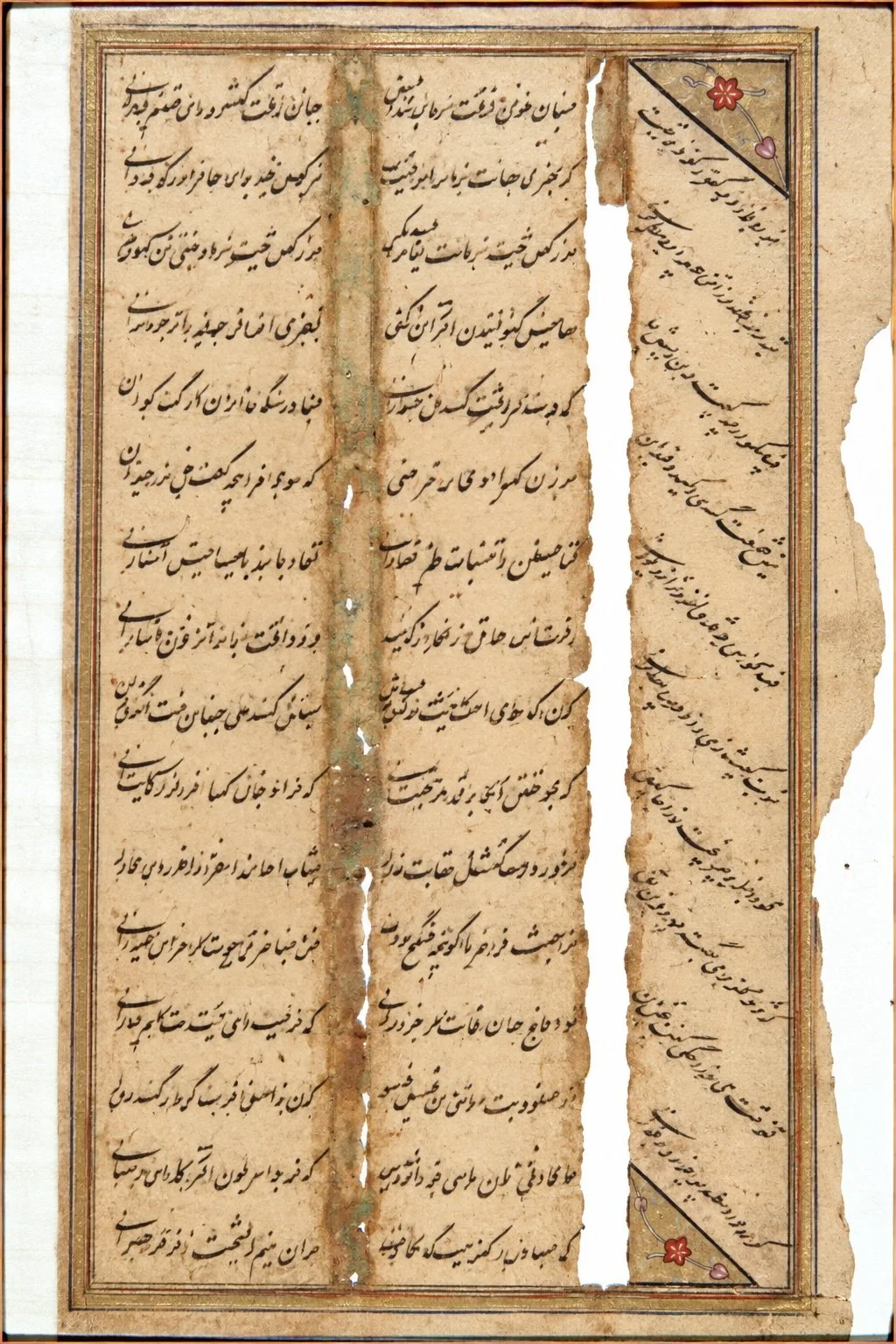
Safavid Persian illuminated manuscript., Checklist no.13, Destruction of pure copper green, Private collector (M. Atiqi).
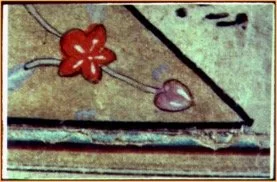
Safavid Persian illuminated manuscript., Checklist no.13, Destruction of pure copper green, Magnified X50, Private collector (M. Atiqi).
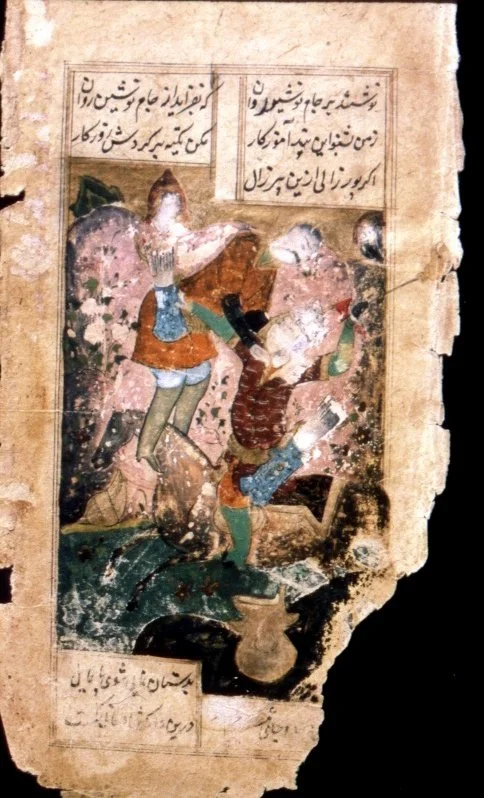
Safavid Persian illuminated manuscript, Checklist no.18. Mixture of copper green pigment with saffron, Private collector (M. Atiqi).
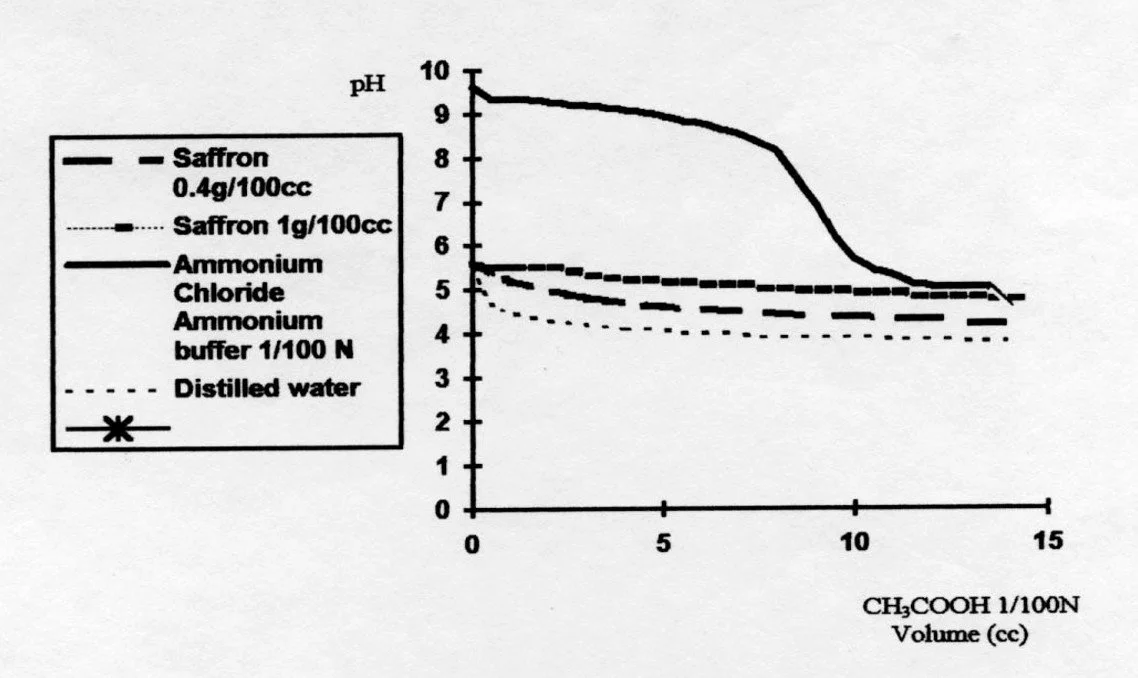
Ph variation of different solutions due to incremental addition of acetic acid 1/100 N
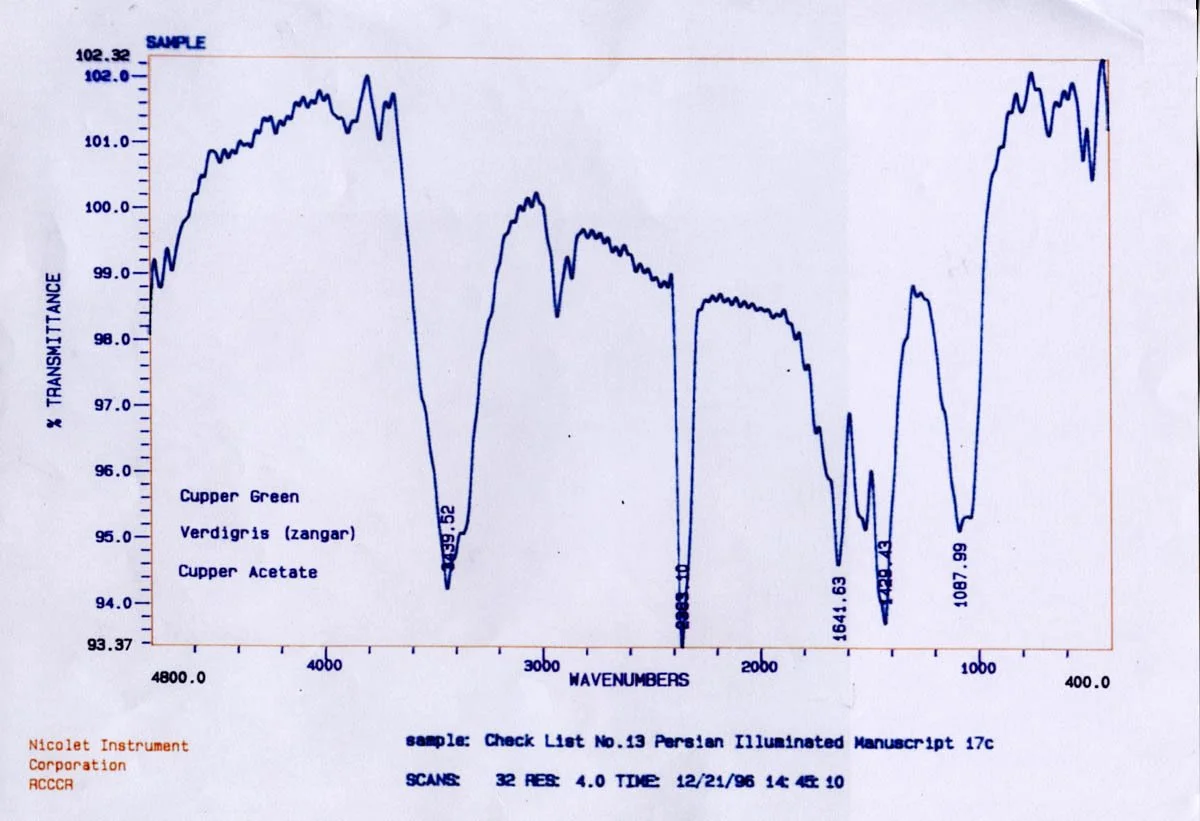
FT-IR Analysis, Safavid Persian illuminated manuscript., Checklist no.13, Destruction of pure copper green, Magnified X50, Private collector (M. Atiqi).
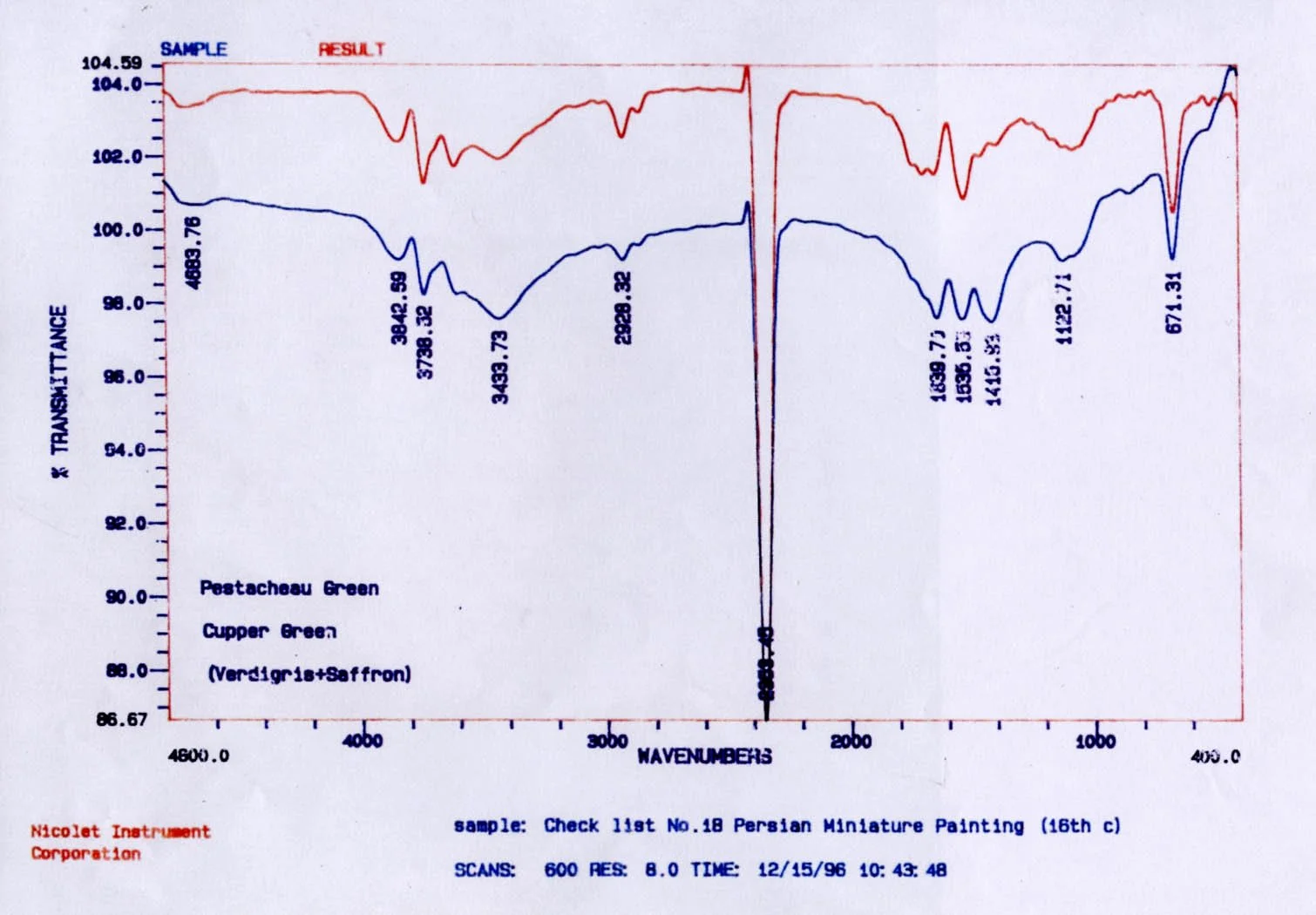
FT-IR Analysis, Safavid Persian illuminated manuscript, Checklist no.18. Mixture of copper green pigment with saffron, Private collector (M. Atiqi).
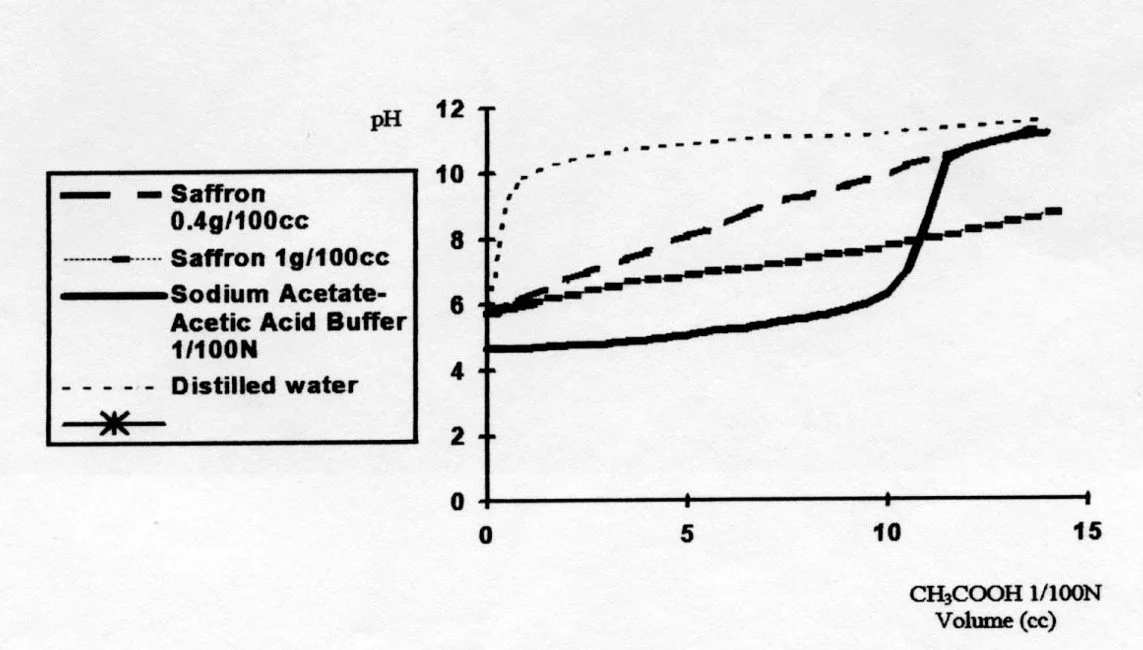
Ph variation of different solutions due to incremental addition of sodium hydroxide 1/100 N
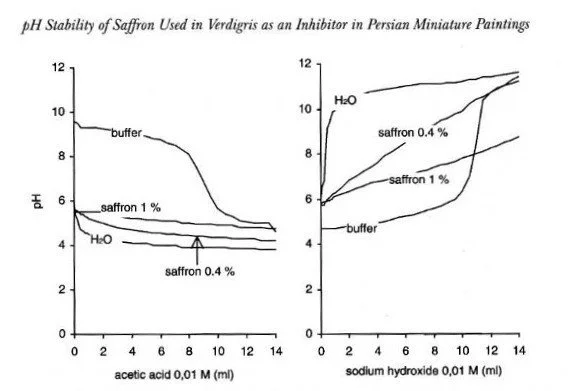
Ph variation of different solutions due to incremental addition of acetic acid (left) and sodium hydroxide (right).
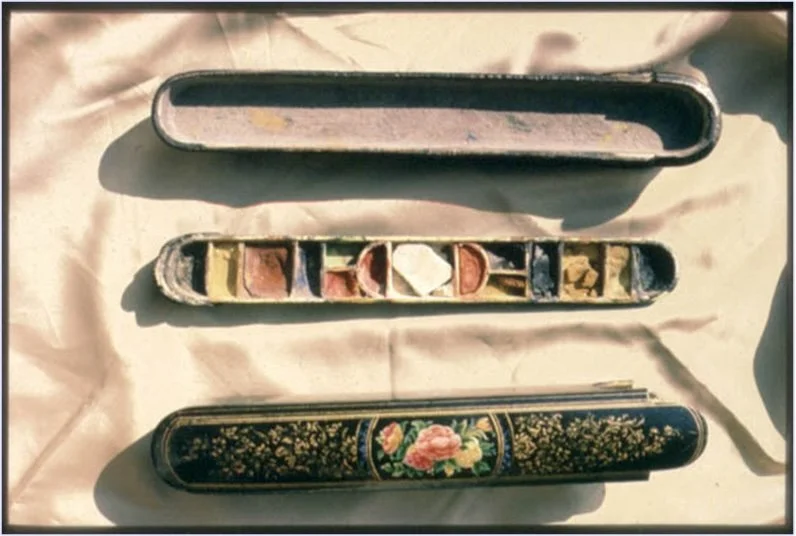
Safavid paint box, 16th century A.D. Private collector (M. Tavoosi), Checklist no. 21, Mixture of copper green and saffron.