OTHER HISTORICAL RECIPES AND NAMED VARIETIES OF ZANGĀR
Introduction
Majmūʿah al-Ṣanāyeʿ preserves an unusually rich sequence of historical recipes and named preparations of zangār. The recipes vary substantially in their starting metals, acidic media, additives, heating, humidity, burial, scraping, grinding, and purification procedures. They are presented here in their historical sequence and terminology and, where appropriate, are related to the experimental reconstruction methods presented elsewhere in the Copper Green Pigments (Zangār) section of the website.
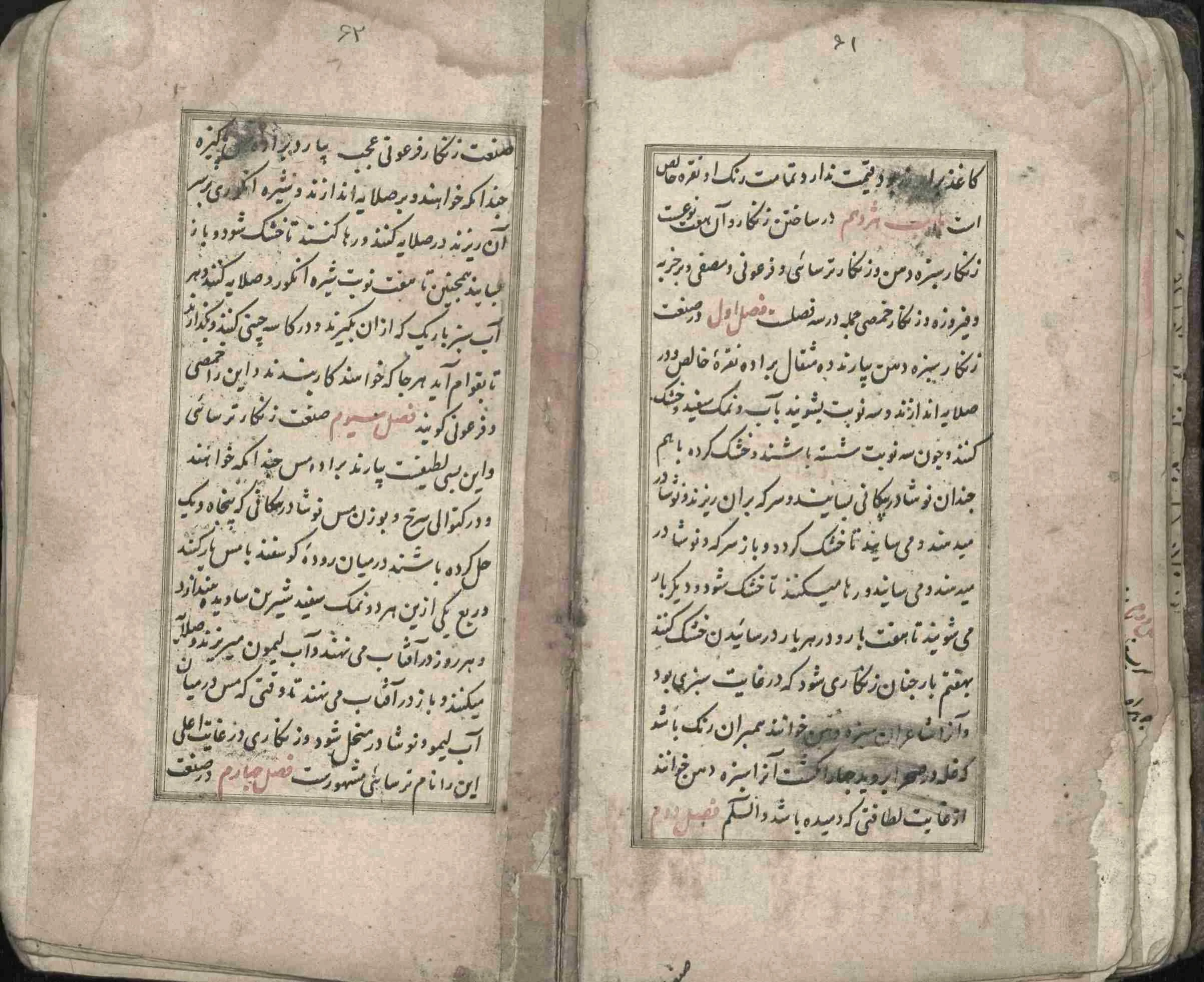
Zangār-e Sabz-e Damanī
Source: Anonymous, Majmūʿah al-Ṣanāyeʿ, MS 3875, fol. 61r.
Original Persian recipe:
زنگار سبز دمنی : "در صنعت زنگار سبزه دمن بیاورند ده مثقال براده نقره خالص و در صلایه اندازند و سه نوبت بشویند به آب و نمک سفید و خشک کنند و چون سه نوبت شسته باشند و خشک کرده با هم چندان نوشادر کانی بسایند و سرکه بر آن ریزند و نوشادر می دهند و می سایند و رها می کنند تا خشک شود و دیگر بار می شویند تا هفت بار و درهر بار در ساییدن خشک کنند . به هفتم بار چنان زنگاری شود که در غایت سبزی بود و آنرا شاعران سبزه دمن خوانند."
English translation:
For making zangār-e sabz-e damanī they take ten methqāl of silver filings and place the silver in a mortar, washing it with water and salt three times and then drying it. Then they add vinegar followed by powdered sal-ammoniac mineral while continuing to bray; then they leave the mixture to dry and finally it is washed. They repeat this process seven times and each time they dry the mixture after braying. At the end of the seventh time, a zangār will be obtained that is a deep green and which the poets call sabz-e daman.
The recipe is exceptional because it specifies silver rather than copper. The historical use of the word zangār for corrosion products on metals may help explain the terminology; alternatively, the “silver” may have contained copper. This interpretation should remain cautious.
Zangār-e Ferʿūnī
Source: Anonymous, Majmūʿah al-Ṣanāyeʿ, MS 3875, fol. 62l.
Original Persian recipe:
زنگار فرعونی: " بیارند براده مس پاکیزه چندانکه خواهند و بر صلایه اندازند و شیره انگور بر سر آن ریزند در صلایه کنند و رها کنند تا خشک شود و باز بسایند همچنین تا هفت نوبت شیره انگور و صلایه کنند و هر بار آب سبز باریک که از آن بگیرند و در کاسه چینی کنند و بگذارند تا به قوام آید هرجا که خواهند کار بندند، این را خمصی و فرعونی گویند."
English translation:
They take copper filings and place them in a stone mortar, adding grape juice and then they are brayed. Then they leave the mixture to dry and bray it again, repeating the process of adding grape juice and braying seven times. Each time the small amount of green that is produced will be poured into a porcelain bowl till it reaches a syrup-like consistency and it is used wherever they want. This zangār is called ḫamṣī or ferʿūnī.
The name ferʿūnī may be interpreted as “Pharaonic,” but the historical meaning remains uncertain. Another copy of Majmūʿah al-Ṣanāyeʿ gives a variant reading related to ḫamṣī/ḥamż.
Zangār-e Tarsāʾī
Source: Anonymous, Majmūʿah al-Ṣanāyeʿ, MS 3875, fol. 62l.
Original Persian recipe:
زنگار ترسائی : صنعت زنگار ترسائی و این بسی لطیفست بیارند براده مس چندانکه خواهند و در کتوالی سرخ و به وزن مس نشادر کانی که پنجاه و یک حل کرده باشند در میان روده گوسفند با مس یار کنند [و در کتوره خیس کنند] و ربع یکی از این هر دو نمک سفید شیرین سائیده بیندازند و هر روز درآفتاب می نهند و آب لیمون میریزند و صلایه میکنند و باز در آفتاب می نهند تا وقتی که مس در میان آب لیمو و نشادر منحل شود و زنگاری در غایت اعلی این را نام ترسائی مشهور است"
English translation:
For making zangār-e tarsāʾī, which is very fine, they take the desired amount of copper filings in a red old container and to the same weight of copper add sal-ammoniac mineral which is dissolved (in water) in a ratio of fifty to one. (The second copy of Majmūʿah al-Ṣanāyeʿ mentions a ratio of five to one.) Then place them in a sheep’s intestine [the copper and sal-ammoniac] till they become a mixture [and then moisten the mixture in a container], then add one fourth of the mixture, powdered salt and bray them with some amount of lime juice under the sun till the copper thoroughly disperses in sal-ammoniac and lime juice and all is converted to a high quality green zangār. This green is called tarsāʾī.
Tarsāʾī literally means “Christian.” The name may refer to an association with a European green colour, although this remains interpretive.
Zangār-e Borūseh / Farīseh
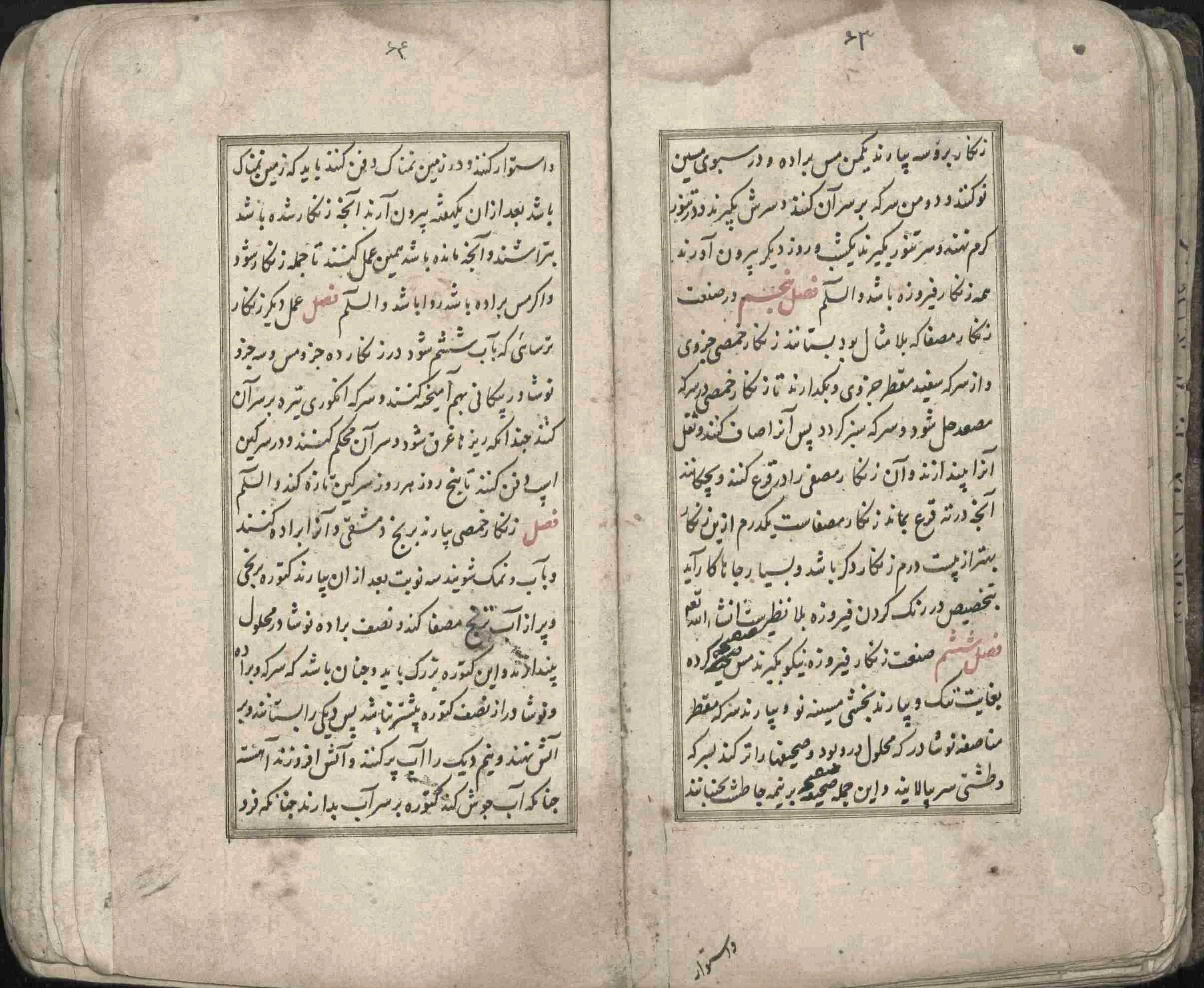
Source: Anonymous, Majmūʿah al-Ṣanāyeʿ, MS 3875, fol. 62l–63r; variant name in MS 10-4077.
Original Persian recipe:
زنگاربروسه / فریسه : "در صنعت زنگار فریسه بیارند یک من مس براده در سبوی مسین نو کنند و دو من سرکه بر سر آن کنند و سرش بگیرند و در تنور گرم نهند و سر تنور بگیرند یک شب و روز دیگر بیرون آورند همه زنگار فیروزه باشد.
English translation:
For making zangār-e borūseh / zangār-e farīseh they take one mann of copper filings and place it in a copper bowl and add two mann of vinegar. Then they place this in a closed heated caulderon. After a full day and night, they scrape out of the copper bowl all the copper filings that are converted to zangār with a turquoise colour.
The first manuscript can be read as borūseh, while the later copy gives farīseh. The interpretation of these names remains uncertain; the second form is also known from paper-dye terminology.
Zangār-e Moṣaffā
Source: Anonymous, Majmūʿah al-Ṣanāyeʿ, MS 3875, fol. 63r.
Original Persian recipe:
زنگار مصفّا : " در صنعت زنگار مصفّا که بلا مثال بود که بستانند زنگار خمصی جزوی و از سرکه سفید مقطر جزوی و بگذارند تا زنگار خمصی در سرکه مصعد حل شود و سرکه سبز گردد و پس آنرا صاف کنند و ثقل آنرا بیاندازند و آن زنگار مصفا در قرع کنند و بچکانند آنچه در ته قرع بماند زنگار مصفاست. یک درم از این زنگار بهتر از بیست درم زنگار دگر باشد و بسیار جاها کار آید بتخصیص در رنگ کردن فیروزه بلا نظیر است "
English translation:
For making zangār-e moṣaffā , which is unique, they take a small amount of zangār-e ḫamṣī and add some distilled white vinegar till the zangār-e ḫamṣī dissolves in the vinegar and the vinegar becomes green. Then they filter it and pour it in a flask to precipitate. What remains at the bottom of the flask is zangār-e moṣaffā. One dram of this zangār is better than twenty drams of other kinds of zangār and it can be used in many places. It is unique for its turquoise colouring.
Moṣaffā means refined or purified. This recipe is technologically distinctive because it begins with a previously prepared pigment rather than metallic copper.
Zangār-e Fīrūzehī
Source: Anonymous, Majmūʿah al-Ṣanāyeʿ, MS 3875, fols. 63r–64l.
Original Persian recipe:
زنگار فیروزه: صنعت زنگار فیروزه نیکو بگیرند مس صحیفه کرده به غایت تنک کرده و بیارند بخشی (طشتی) مسینه نو و بیارند سرکه مقطر مناصفه نوشادرکه محلول درو بود و صحیفها را تر کنند بسرکه و طشتی سر بپالایند]بالا نهند [و این جمله صحیفه بر نیمه (همه) جا طشت بچسبانند و استوار کنند و در زمین نمناک دفن کنند باید که زمین نمناک باشد بعد از آن یکهفته بیرون آرند و آنچه زنگار شده باشند بتراشند و آنچه مانده باشد همین عمل کنند تا جمله زنگار شود و اگر مس براده باشد روا باشد.
English translation:
For making zangār-e fīrūzehī they take a copper plate and make it into very thin strips. Then they bring a new copper basin, into which distilled vinegar and sal-ammoniac have been put in equal portions. They moisten the copper strips with vinegar and stick them into the basin firmly using another basin to cover the top. Then they bury the basins in moist soil. The soil needs to be moist and after a week they take them out. They scrape the parts that are converted to zangār and repeat the same process with what remains till all [copper strips] converts to zangār. It is better to use copper filings in the process.
The name fīrūzehī refers to turquoise. The recipe combines distilled vinegar, sal-ammoniac, moist burial, and repeated scraping.
Other Zangār-e Tarsāʾī Preparation
Source: Anonymous, Majmūʿah al-Ṣanāyeʿ, MS 3875, fol. 64l.
Original Persian recipe:
عمل دیگرزنگار ترسائی: " ده جزو مس و سه جزو نوشادر کانی به هم آمیخته کنند و سرکه انگوری تیره بر سر آن کنند چندانکه ریزها غرق شود و سر آن محکم کنند و در سرگین اسب دفن کنند تا پنج روز. هر روز سرگین تازه کنند."
English translation:
The other type of zangār-e tarsāʾī: They take ten portions of copper and add three portions of sal-ammoniac and pour strong grape vinegar on the mixture as much as the copper filings will soak up. Then they close the container tightly and bury it in horse dung for five days. Every day they replace the old horse dung with fresh.
The use of fresh horse dung most likely provided a mild, sustained source of heat during the reaction.
Zangār-e Ḫamṣī
Source: Anonymous, Majmūʿah al-Ṣanāyeʿ, MS 3875, fols. 64l–65r.
Original Persian recipe:
زنگار خمصی: " بیارند برنج دمشقی و آنرا براده کنند و به آب و نمک بشویند. سه نوبت بعد از آن بیارند کنوره برنجی وپر از آب ترنج مصفّا کنند و نصف براده، نوشادر محلول بیندازند و این کنوره بزرگ باید و چنان باشد که سرکه و براده و نوشادر نصف کنوره بیشتر نباشد پس دیگی را بر بستانند و بر آتش نهند و نیم دیگ را آب پر کنند و آتش افروزند آهسته چنانکه آب جوش کند کنوره بر سر آب بدارند چندانکه فرو نرود و طاس بر سر دیگ گردانند چنان که کناره های طاس از آب دیگ بیرون باشد تا عرق در دیگ نرود پس آب می جوشند و براده برنج در آب ترنج حل می شود پنج بار سبز میشود و درهر یکی ساعت آنچه سبز شده باشد در ظرف چینی می کنند و بازآب ترنج می ریزند و زنگار می گیرند. این زنگار بر چند زنگار دیگر شرف دارد. "
English translation:
For making zangār-e ḫamṣī take some Damascus brass filings and wash them three times with salt and water. Then bring a large brass vessel (kanūreh) and fill it with filtered sour orange juice. Add sal-ammoniac solution in half portion to the brass filings. The mixture of Damascus brass, sour orange juice and sal-ammoniac solution should not fill more than the half of the brass vessel (kanūreh). Then take a big pot and pour water until it is half full and bring it to a boil on the fire. Then the brass vessel (kanūreh) should be placed over the boiling water pot in a manner that it doesn’t sink into the water. Place a loose lid on top so that steam can escape and prevent water condensation from dropping back onto the brass filings in the container. The brass filings will be dissolved in the juice of sour oranges over the boiling water bath. Once every hour for five hours, they scrape the produced green and continue the process by adding juice of sour oranges to the pot each time to obtain zangār. The zangār that is obtained in this way is far better than the other types of zangār.
This recipe is exceptional for its use of Damascus brass rather than copper, sour-orange juice, sal-ammoniac, and a water-bath heating system. The meaning of ḫamṣī remains uncertain.
Technological Observations Across the Majmūʿah al-Ṣanāyeʿ Recipes
Taken together, these recipes demonstrate that zangār was not produced through a single standardised process. Variations in starting metal, physical form, acidic medium, sal-ammoniac, heating, humidity, burial, repeated scraping, grinding, and secondary purification point instead to a technologically diverse family of green and blue-green preparations. The named varieties also preserve evidence of a specialised practical vocabulary associated with colour, quality, origin or association, and method of processing.
References
Anonymous. Majmūʿah al-Ṣanāyeʿ (1005 AH/1597), Central Library of Tehran University, MS 3875; partly edited by N. Mayel Heravi as “Haliyat-al Ketab,” in Ketāb-ārāyī dar Tamaddon-e Eslāmī, 499–504. Mashhad: Islamic Research Centre of Astan-e Quds-e Razavi, 1993.
Navayie, Abbas Ali. Majmūʿah al-Ṣanāyeʿ (1253 AH/1837), Islamic Consultative Assembly Library, Museum and Documentation Centre, MS 10-4077.
Source: Central Library of Tehran University, Majmūʿah al-Ṣanāyeʿ, MS 3875, fol. 61-64