COPPER FILINGS IN YOGHURT
Introduction
The second major historical technological family replaces vinegar with sheep-milk yoghurt or other sheep-derived substances. The project reconstruction specifically uses copper filings in yoghurt. The wider documentary corpus includes yoghurt, sour coagulated sheep’s milk (joġrāt/chughrāt), and water from sheep’s blood (chaqar/ḫūn-āb). These related materials are presented together because the research identifies them as historical alternatives to the vinegar route, while the reconstruction itself should be described only as the yoghurt method.
Historical Recipes
Principal Recipe(s) Most Directly Related to the Reconstruction
Recipe 1: Khwājah Naṣīr al-Dīn Ṭūsī
Source: Khwājah Naṣīr al-Dīn Ṭūsī, Tansūkh-nāmeh-ye Īlkhānī, p. 215.
Original Persian recipe:
...و اگر نحاس را با ماست بیامیزند، ازو زنجار حاصل شود.
English translation:
…and if copper is mixed with yogurt, zangār will be obtained.
Recipe 2: Mīr ʿAlī Haravī
Source: Mīr ʿAlī Haravī, Medād al-Ḫoṭūṭ, p. 100.
Original Persian recipe:
و اگر به عوض سرکه آب ماست گوسفند کنند شاید، و چون خواهند که آن را حل کنند و با آن کتابت کنند در کاسه چینی با صمغ و انزروت حل کرده بکار برند. و انزروت نام درختی است در پارس پوست بر پوست مانند پیاز، هرچه از آن درخت به شب درآید سفیدتر شود و هرچه به روز در آفتاب بماند سرخ شود. اما چون مدّتی کاغذ را زنگاری که به آب ماست گرفته باشند سوراخ کند تدبیر آن است که اندک زعفران به آن ضمّ کند تا پایدار بماند.
English translation:
[…] and if sheep-milk yoghurt is used instead of vinegar, that can also work. If you want to dissolve it (zangār) so that it can be used for calligraphy, place it in a porcelain container and mix it with gum arabic and anzarūt gum. ʿAnzarūt is the name of a Persian tree that has a number of layers of skin (bark) similar to an onion. What is taken from this tree at night (the bark) will get whiter and what is taken in sunlight will get redder. The zangār, which is made with yoghurt, chars paper. The solution is to add a small amount of saffron (zaʿfarān) so [it] becomes stable.
Ṭūsī gives the clearest concise statement that copper mixed with yoghurt produces zangār, while Mīr ʿAlī Haravī explicitly allows sheep-milk yoghurt to replace vinegar. Other sources document sour coagulated sheep’s milk, sheep-blood-derived liquids, and related preparations. These materials belong to a wider sheep-derived technological family, but they are not chemically or procedurally identical; only the yoghurt route is represented by the project reconstruction.
Related Sheep-Derived Historical Variants (not reconstructed)
Recipe 3: Sīmī Neyshāpūrī
Source: Sīmī Neyshāpūrī, Resāleh-ye Joharīyeh, p. 285 – sheep-blood alternative within the two-method recipe.
Original Persian recipe:
زنگار دو نوع باشد یکی آنک توفال مس را مقداری بستاند و در ظرفی کند و همان مقدار از سرکه کهنه به آب بیامیزد و در چاه آب آویزد و مدت چهل روز بگذارد. پس چون بیرون آرند زنگار شده باشد. نوع دوم را از چقر است گیرند که گوسفندی باشد هم بدین منوال پس از زنگار اولین قدری را به رکویی بپزند و در کاسه چینی به آب عنزروت صلایه کنند و به آب صمغ حل سازند و بدان هر چه خواهد بنویسد.
English translation:
There are two types of zangār. One is [obtained] from copper filings and vinegar which are put into a container and suspended in a well; after forty days it becomes zangār. The other kind [is obtained] by taking the water from sheep’s blood (chaqar) and proceeding in the same manner [as with vinegar]. The zangār is then passed through a piece of cloth, poured into a porcelain bowl and mixed with sarcolla juice (ʿanzarūt). It is then mixed with gum arabic and after that anything can be written with it.
Recipe 4: Solṭān Aḥmad Majnūn Rafiqī Haravī
Source: Solṭān Aḥmad Majnūn Rafiqī Haravī, Savād al-Ḫaṭṭ, p. 194 – sour coagulated sheep’s milk method.
Original Persian recipe:
....نوع دوم از جغرات گیرند که گوسفندی باشد هم بدین نوع پس زنگار اولین را قدری برکویی ریزند و صلایه کنند و بآب صمغ حل سازند و هر چه خواهند نویسند.....
English translation:
...The second technique is to take sour coagulated milk (joġrāt) from sheep and proceed in the same manner [as the first technique with vinegar]. Some [amount of zangār] is then passed through a cloth and pounded. It is then mixed with gum arabic and after that anything can be written with it…
Recipe 5: Anonymous
Source: Anonymous, Resāleh Ṭalā va Noqreh va Ḥall Kardan-e ānhā, p. 530 – sheep’s-blood-water method.
Original Persian recipe:
...نوع دوم از خوناب گیرند که گوسفندی باشد به همین منوال، پس از زنگار ازین قدری به رکوی ریزد و صلایه کند و به آب صمغ حل سازد و هر چه خواهد بنویسد....
English translation:
...The second technique is to take the water from sheep’s blood and proceed in the same manner [as the first technique with vinegar]. Some [amount of zangār] is then passed through a cloth and pounded. It is then mixed with gum arabic and after that anything can be written with it…
Additional documented parallels in the research chapter (full recipe text not reproduced there):
Mansūr, Gohar-nāmeh, pp. 281–282: is specifically reported as recommending the addition of salt to yoghurt during the production of zangār. Because the research chapter does not reproduce the complete Persian recipe, no reconstructed transcription or translation is supplied here.
ʿAlī Hosseini, Morakkab Sāzī va Jeld Sāzī / Kashf al-Ṣanāyeʿ, and Mīrzā Moḥammad Shīrāzī, Kašf al-Ṣanāʿah va maḫzan al-beżāʿah: are identified in the research as continuing the sheep-milk-yoghurt alternative. Their complete wording is not reproduced in the chapter and is therefore not invented here.
Historical Note
The historical sources document yoghurt and other sheep-derived media as alternatives to vinegar in the preparation of zangār. The yoghurt reconstruction presented here should be distinguished from the related joġrāt/chughrāt and sheep-blood preparations, which are retained as documentary parallels but were not individually reconstructed.
Comparative Analysis of the Historical Recipes
Taken together, these recipes demonstrate a distinctive sheep-derived route to copper-green production. Although yoghurt, joġrāt/chughrāt, and sheep-blood preparations occur within the broader documentary tradition, they should not be treated as identical materials or procedures. The reconstruction undertaken in this project focuses specifically on the reaction of copper filings with sheep-milk yoghurt.
Experimental Reconstruction
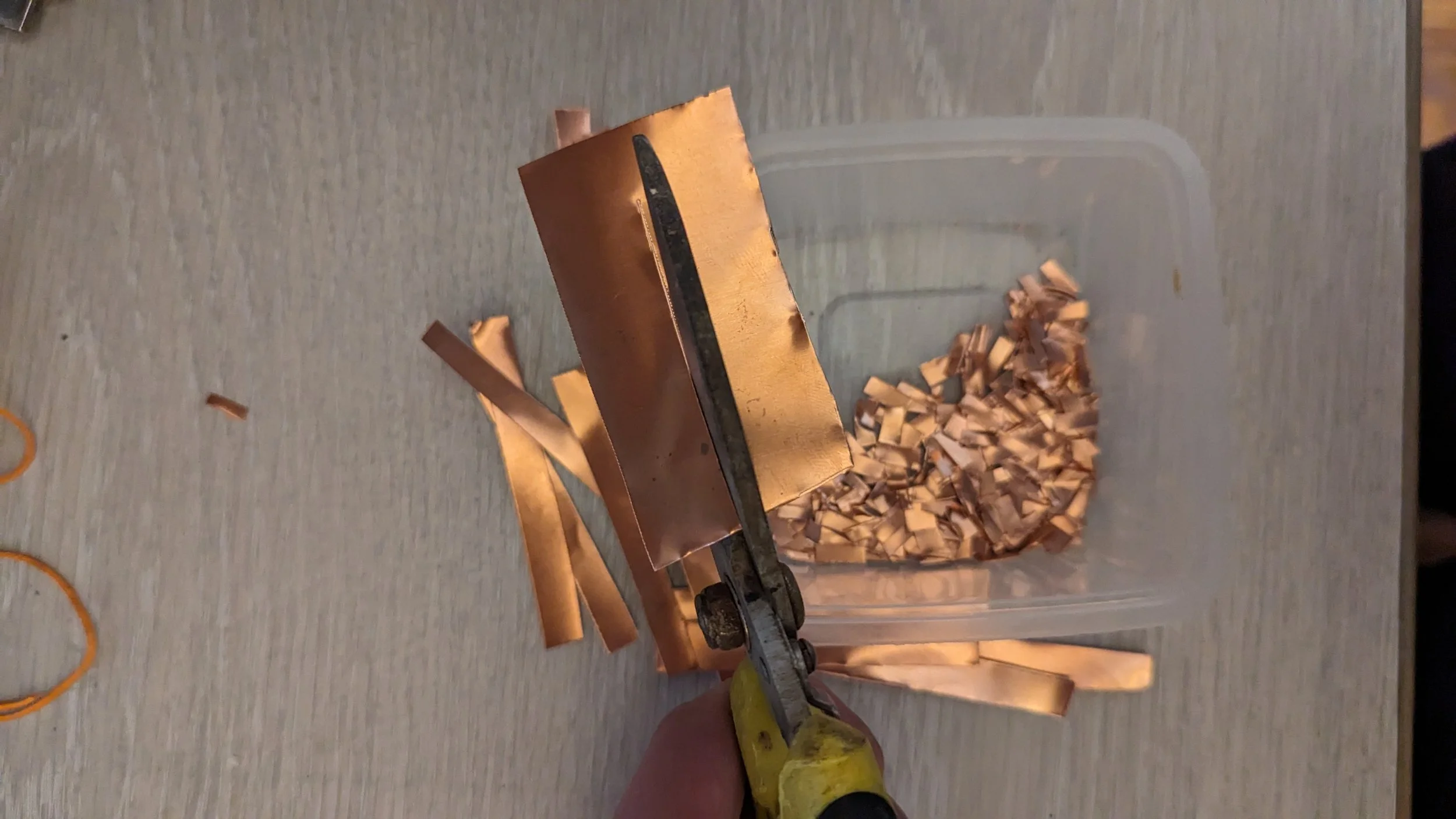
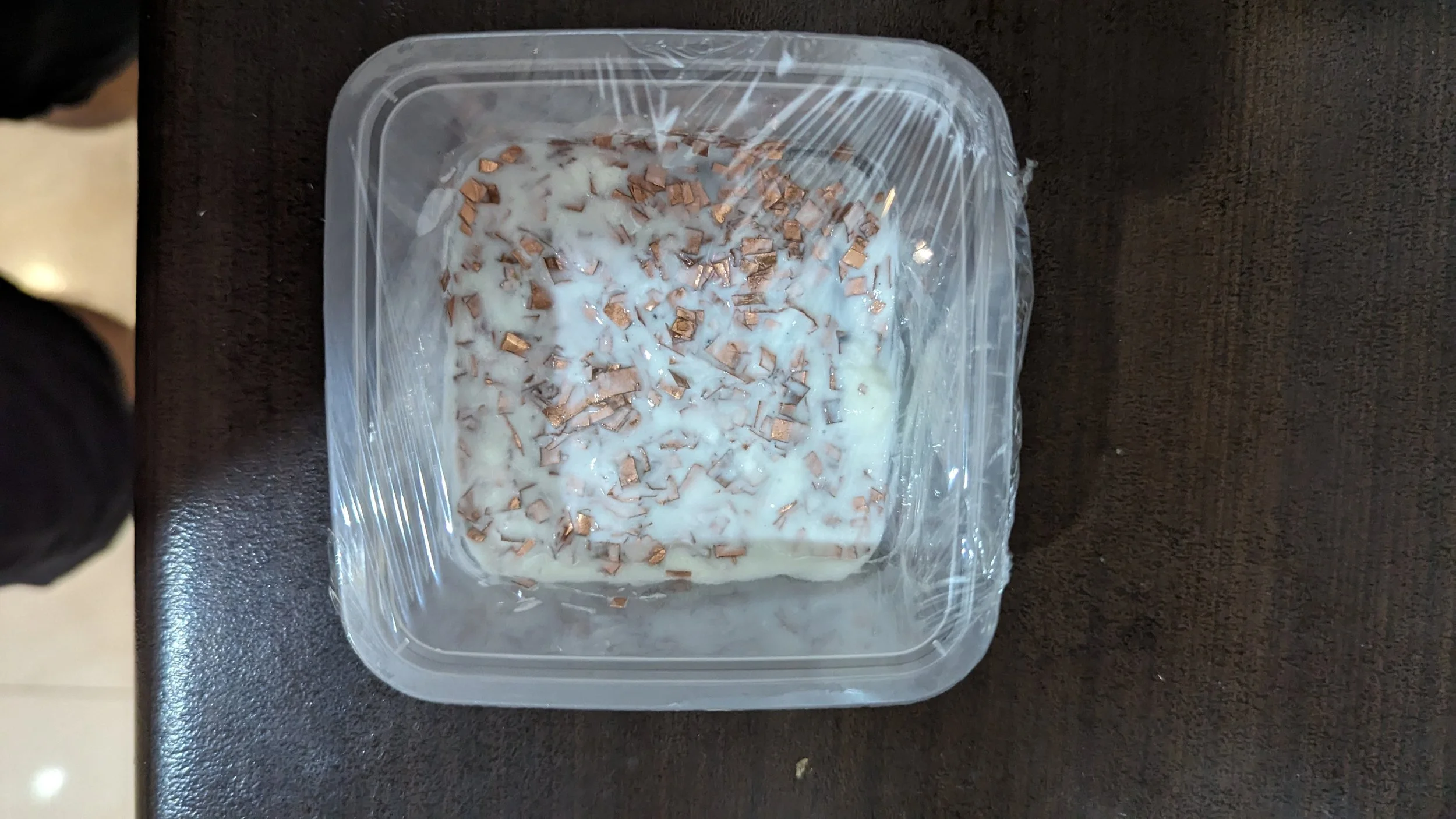
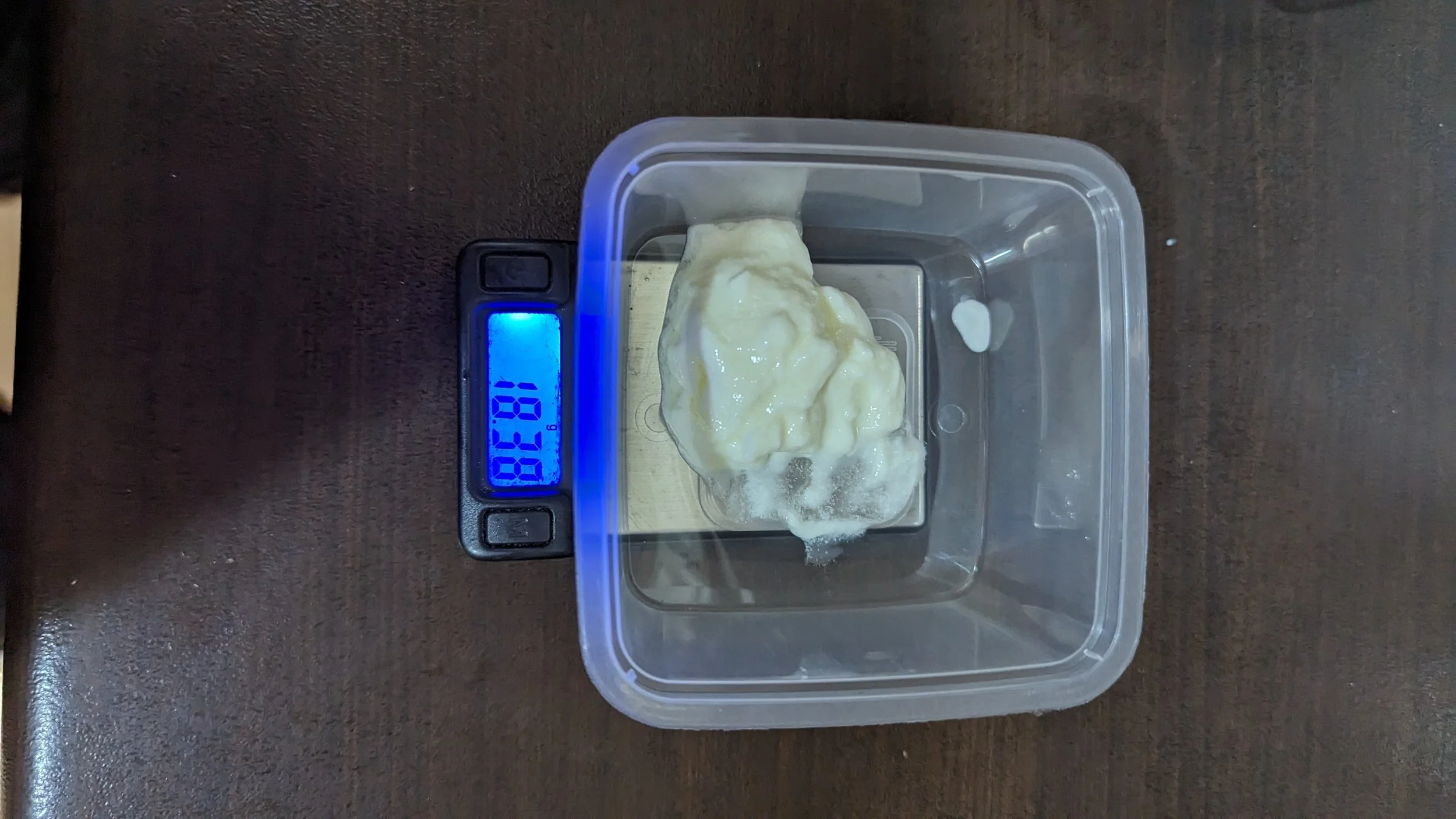
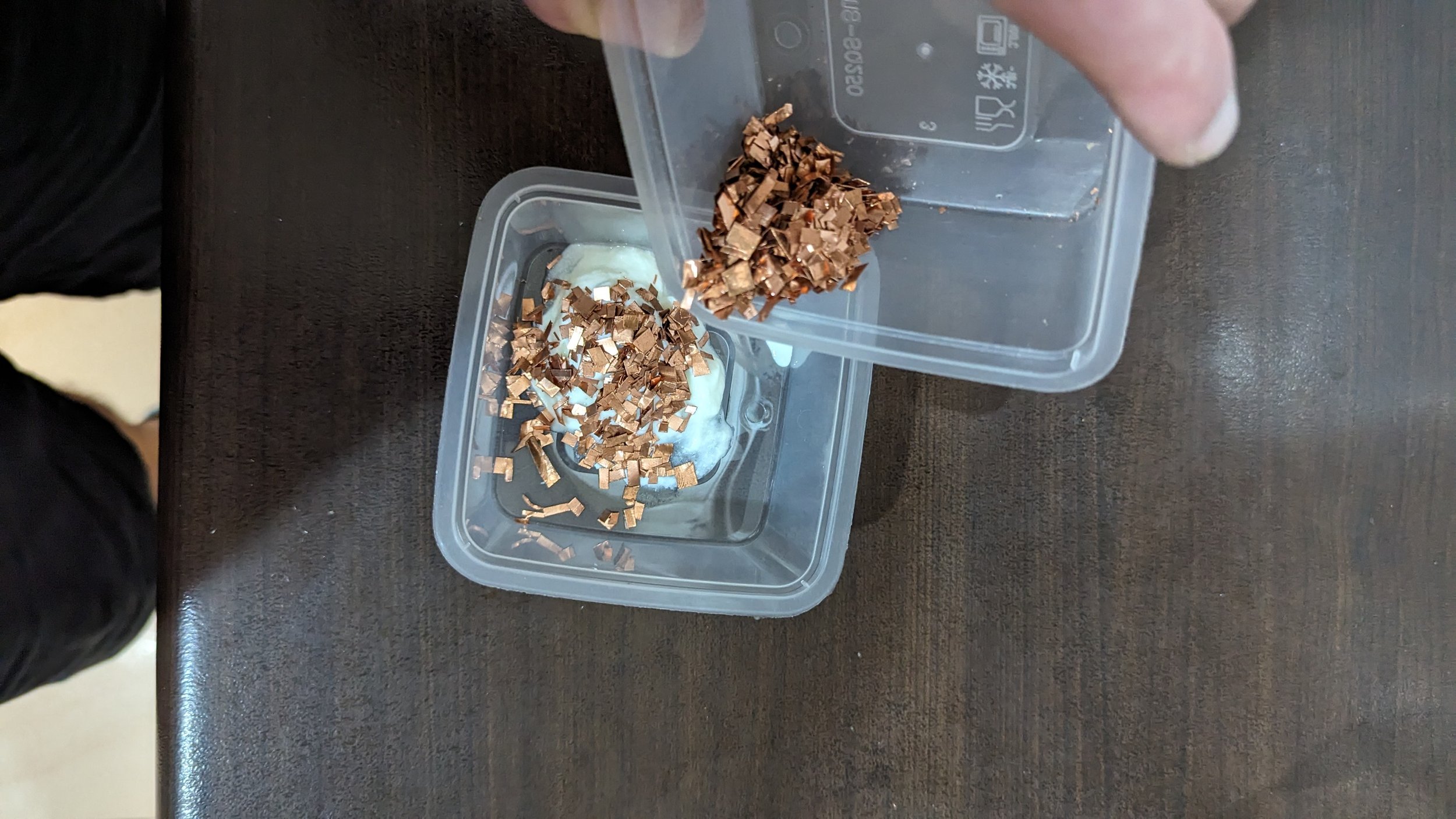
In this project, copper filings were mixed with sheep-milk yoghurt under controlled conditions to investigate the fermented-dairy route to copper-green formation described in Persian technical literature.
Materials
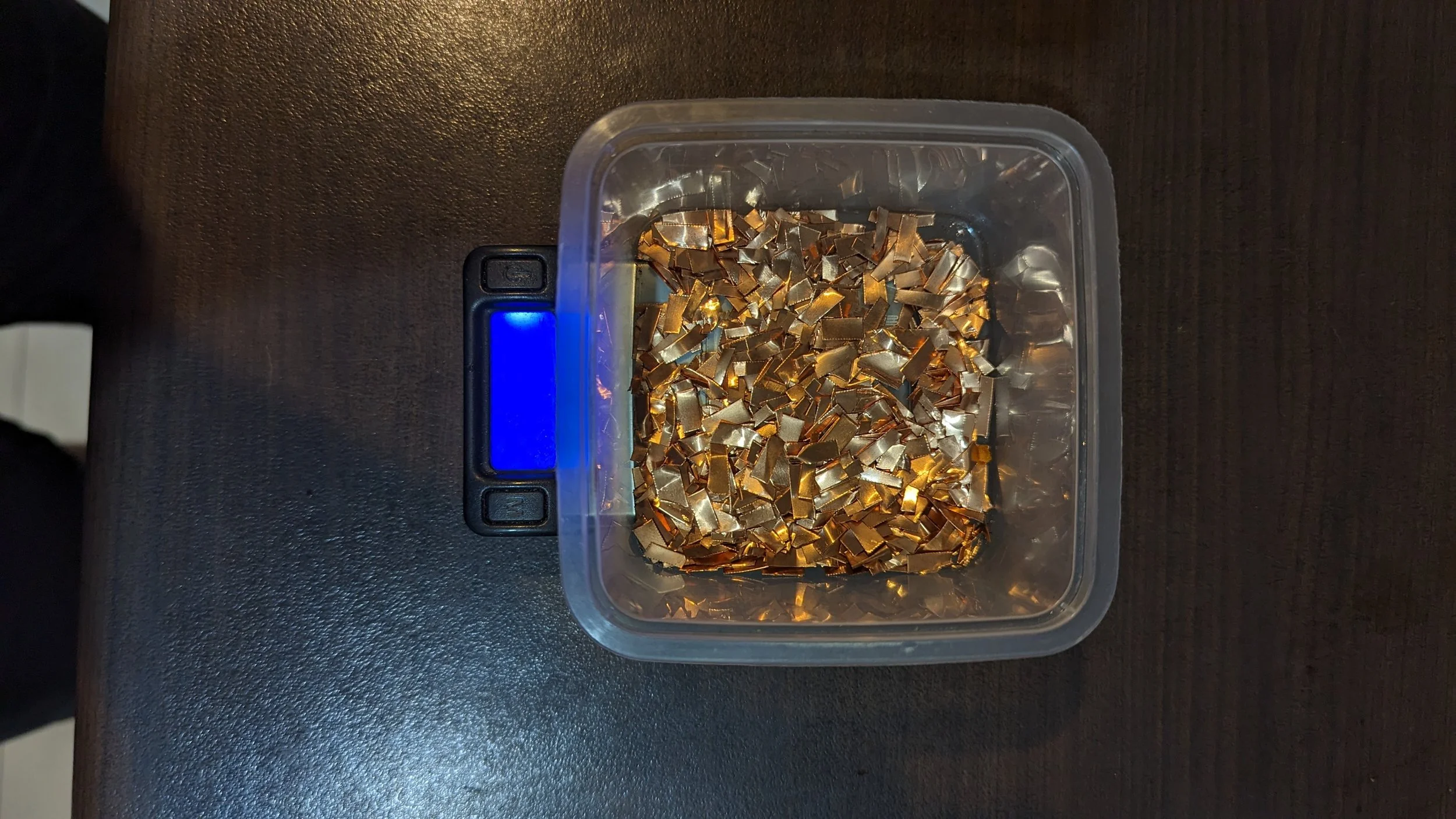
· Copper filings
· Sheep-milk yoghurt
· Glass vessel
Method
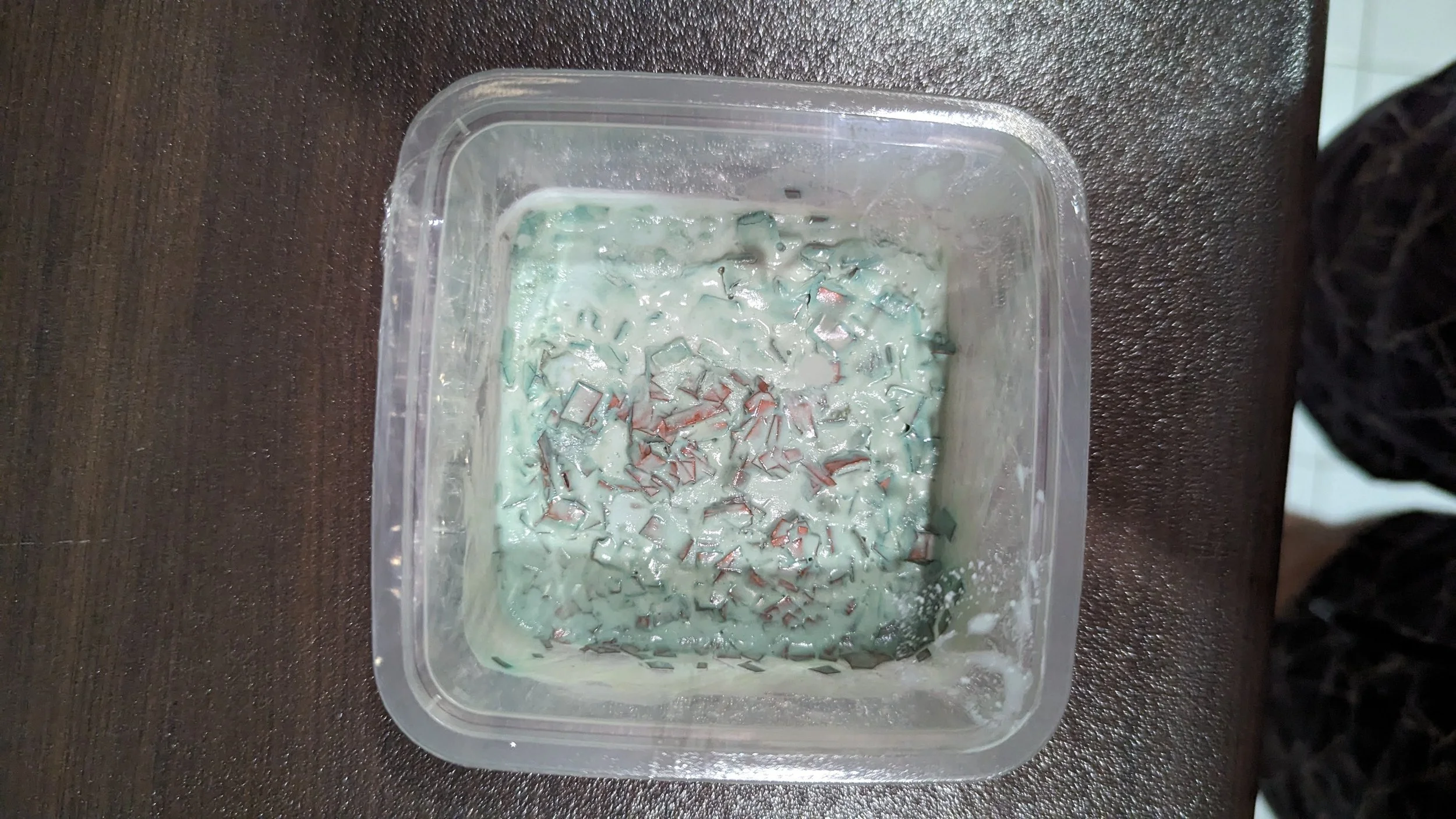
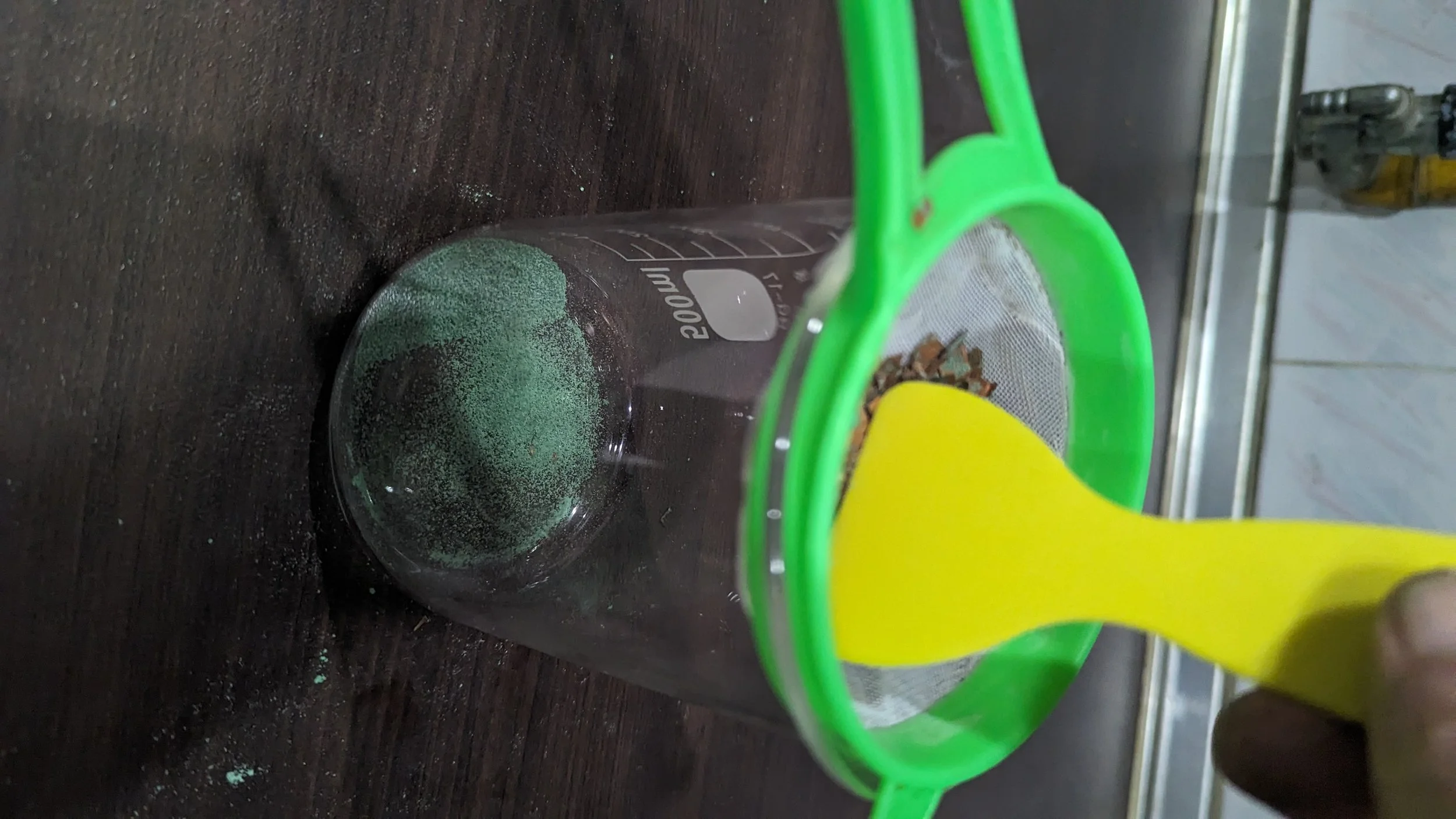
Copper filings were mixed with sheep-milk yoghurt and left under controlled conditions. As green corrosion products formed, the material was collected, dried, and ground into a homogeneous pigment powder. Only the yoghurt route was reconstructed; the joġrāt/chughrāt and sheep-blood preparations are retained as related documentary evidence.
Results and Observations
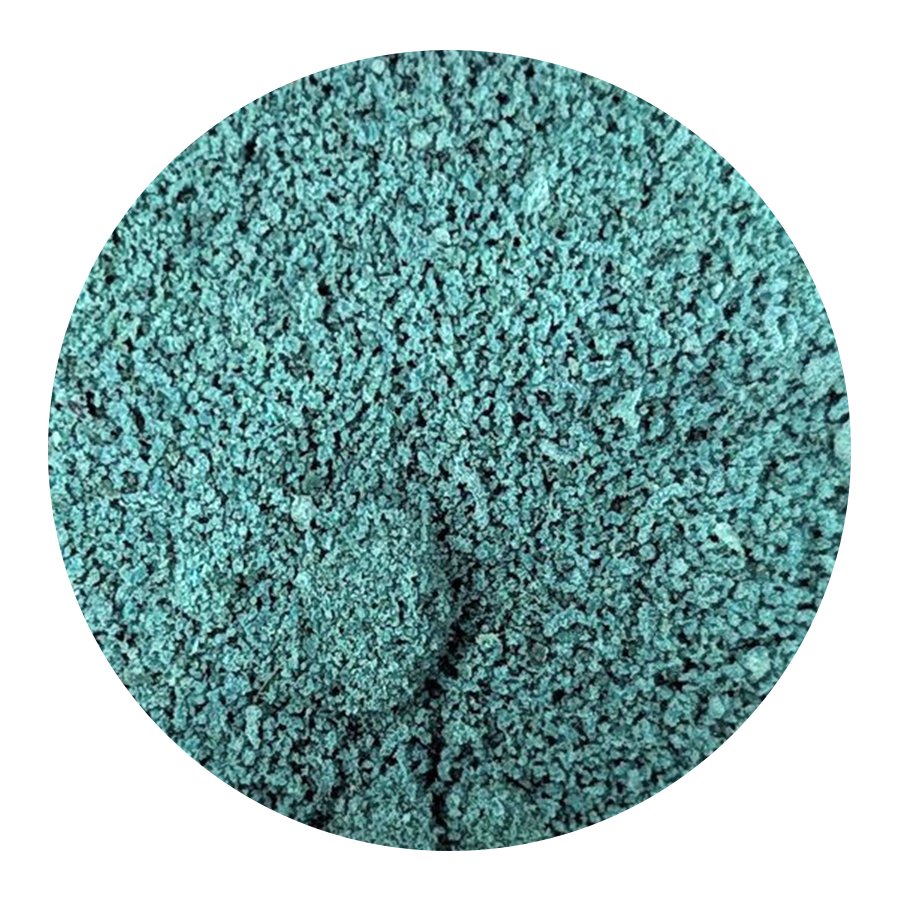
The reconstructed pigment produced a distinctive green colour that differed visually from the vinegar-based reconstructions. Corrosion developed more gradually in the yoghurt medium and produced a material with its own texture and colour characteristics. The experiment demonstrates that fermented dairy material can generate copper corrosion products, supporting the historical descriptions of yoghurt as an alternative to vinegar.
Significance
The yoghurt-based recipes represent a distinctive branch of Persian copper-green technology. Their reconstruction demonstrates the use of a fermented organic medium in pigment manufacture and provides comparative material for the study and conservation of copper-green paints in Persian manuscripts. Related joġrāt/chughrāt and sheep-blood preparations remain documentary parallels and should not be presented as reconstructed samples.
References
Anonymous. Resāleh Ṭalā va Noqreh va Ḥall Kardan-e ānhā (attributed to the Safavid period). In Ketāb-ārāyī dar Tamaddon-e Eslāmī, edited by N. Mayel Heravi, 529–530. Mashhad: Islamic Research Centre of Astan-e Quds-e Razavi, 1993.
Heravi, Mir Ali. Medād al-Ḫoṭūṭ (951 AH/1543). In Ketāb-ārāyī dar Tamaddon-e Eslāmī, edited by N. Mayel Heravi, 87–101. Mashhad: Islamic Research Centre of Astan-e Quds-e Razavi, 1993.
Hosseini, Ali. Morakkab Sāzī va Jeld Sāzī. In Ketāb-ārāyī dar Tamaddon-e Eslāmī, edited by N. Mayel Heravi, 553–568. Mashhad: Islamic Research Centre of Astan-e Quds-e Razavi, 1993.
Majnūn Rafiqī Haravī, Solṭān Aḥmad. Savād al-Ḫaṭṭ (930 AH/1523), MS 3522, Tehran University Central Library, dated 1056 AH/1646.
Mansūr, Mohammad. Gohar-nāme (858–882 AH/1454–1478), edited by Manuchehr Sotoodeh, vol. 4, 185–302. Tehran: Farhang-e Irān Zamīn, 1335 SH/1956.
Neyshāpūrī, Sīmī. Resāleh-ye Joharīyeh (837 AH/1433). In Resāleh dar Ḫošnevīsī va Honar-hāye Vābasteh, edited by H. R. Qelich-khani, 273–292. Tehran: Rowzaneh, 1994.
Shirazi, Mirza Mohammad. Kašf al-Ṣanāʿah va Maḫzan al-Beżāʿah (printed Bombay, 1322 AH/1904). In Resāleh dar Ḫošnevīsī va Honar-hāye Vābasteh, edited by H. R. Qelich-khani, 294–303. Tehran: Rowzaneh, 1994.
Ṭūsī, Khwājah Naṣīr al-Dīn. Tansūkh-nāmeh-ye Īlkhānī (653–663 AH/1255–1265), edited by Modarres Razavi. Tehran: EBFI, 1348 SH/1969.