COPPER SHEETS EXPOSED TO VINEGAR VAPOUR AND SCRAPED
Introduction
This category examines copper exposed to an acetic-acid-rich humid atmosphere, with the corrosion layer removed from the metal surface. The closest Persian textual evidence emphasises humidity, enclosed copper/vinegar arrangements, and scraping. The reconstruction uses copper sheets exposed to vinegar vapour; the historical parallels below include related arrangements that are not all identical to the reconstruction.
Historical Recipes
Principal Recipe(s) Most Directly Related to the Reconstruction
Recipe 1: Ḥubaysh Tiflīsī
Source: Ḥubaysh Tiflīsī, Bayān al-Ṣenāʿat, pp. 304–305.
Original Persian recipe:
مس تنک را بدرون سرکه بیانداید تا مس را بسوهان بساید وزان پس بروی سرکهٔ تیز بریزد و بجا گاهی نمناک بنهد یا سرکه در کاسهٔ مسین کند و کاسهٔ دیگر هم مسین بروی فرو نهد و رهاش کند تا زنگ بگیرد. پس از آن زنگ وی را به کارد بتراشد یا مس سوده با نوشادر بیامیزد و بجایگاه نمناک نهد و روزی چند رها کند تا زنگار گیرد.
English translation:
Copper filings are placed in vinegar till they are corroded. Then strong vinegar is added and the mixture is placed in a humid place. Or, pour some vinegar in a copper bowl and cover it with another copper bowl, leave it till the copper starts to patinate and then obtain verdigris by scraping the patina with a knife. Or, add sal-ammoniac to copper filings (and vinegar) and keep the mixture in a humid place for a few days till it all converts to zangār.
The vapour reconstruction corresponds most closely to Tiflīsī’s enclosed copper-bowl arrangement. The research notes that the text does not specify whether one or both bowls corrode; the bowl exposed to liquid vinegar and the bowl exposed to vinegar vapour may have corroded at different rates.
The principal textual evidence shows several related ways of exploiting an acetic-acid-rich humid environment. Tiflīsī’s enclosed copper-vessel arrangement is the closest conceptual parallel to the vapour reconstruction because it combines vinegar, enclosed copper surfaces, humidity, and scraping. Ṣādeq Beyg Afshār’s buried moist-vinegar arrangement and al-Rāzī’s milk-pretreated vapour method are technologically related, but introduce different variables and are therefore retained as comparative evidence rather than treated as identical reconstructions.
Related Historical Variant (not individually reconstructed)
Recipe 2: Ṣādeq Beyg Afshār
Source: Ṣādeq Beyg Afshār, Qānūn al-Ṣovar, p. 353.
Original Persian recipe:
بکن چاهی دو گز در جای نمناک صفایح کن تنک، لیک از مس پاک
بریز از سرکۀ ناصاف چندان که گردد سرکه ها در خاک پنهان
در آن جایی بنه یک مه کم و بیش بپوشان از کم و بیشش میندیش
پس از یک ماه بنگرکان تمامی شود زنگار خاطرخواه نامی
English translation:
Dig a hole, two gaz deep in a moist place [and hang] thin blades made of clean copper in it. Pour down unfiltered vinegar, which is absorbed by the soil and cover [the hole].
Leave it there for almost a month —don’t worry if it is a couple of days more or less [than that].
After a month, you will see that the entire [copper] has turned into an attractive zangār.
Historical Note
In this project, copper sheets were exposed to vinegar vapour and the resulting green corrosion layer was scraped from the copper surface for documentation and comparison.
Comparative Analysis of the Historical Recipes
Taken together, these historical recipes demonstrate related approaches to producing copper-green pigments through vinegar-rich and humid environments, while differing in the form of copper, vessel arrangement, duration, and method of exposure. The reconstruction undertaken in this project investigates the vinegar-vapour and surface-scraping principle most closely represented by these historical accounts.
Experimental Reconstruction
In this project, copper sheets were exposed to vinegar vapour, and the resulting green corrosion layer was scraped from the copper surface for documentation and comparison.
Materials
· Copper sheets
· Aged grape vinegar
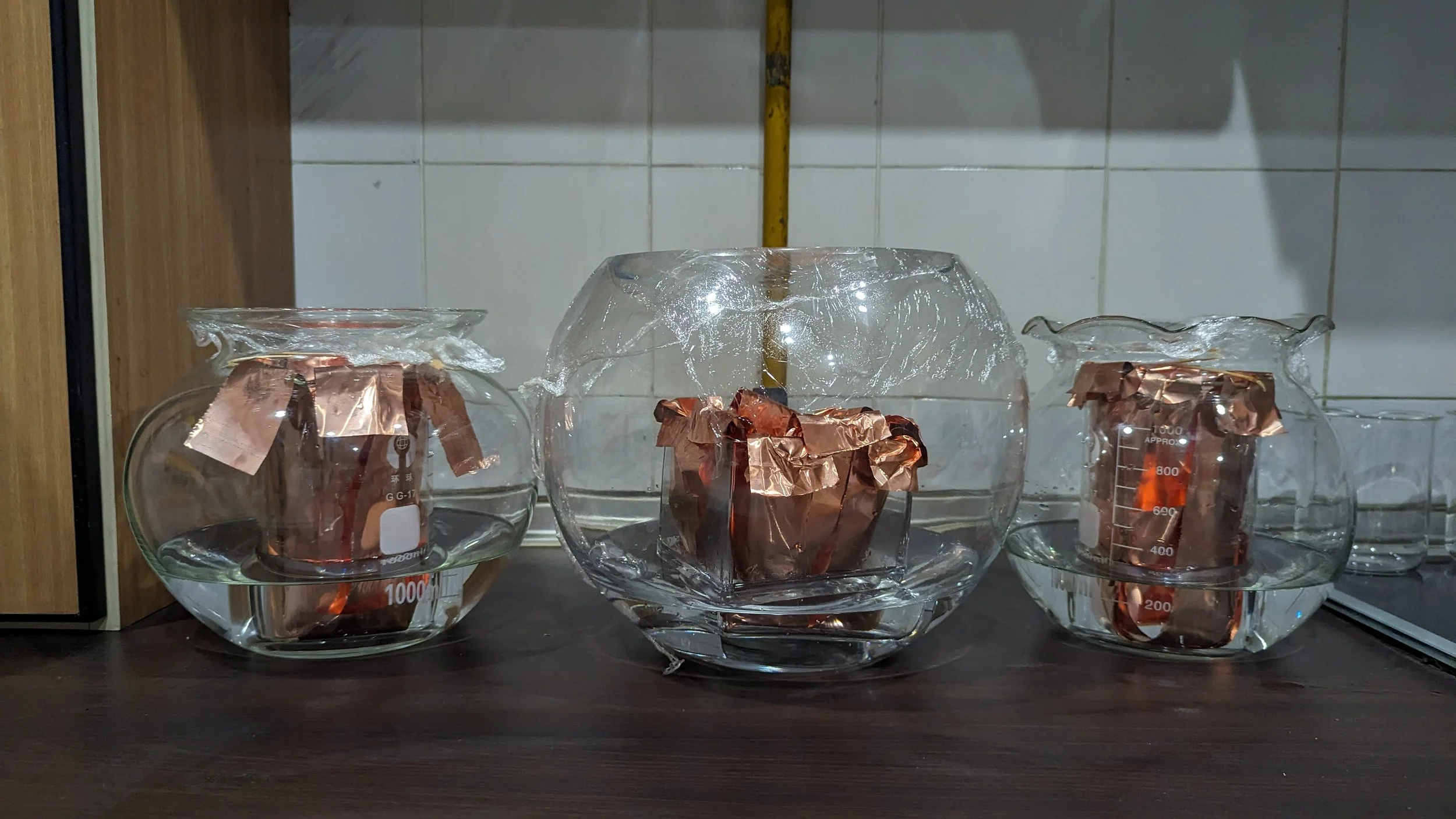
· Reaction vessel with a raised support above the vinegar
· Scraping tool
· Collection vessel
Method
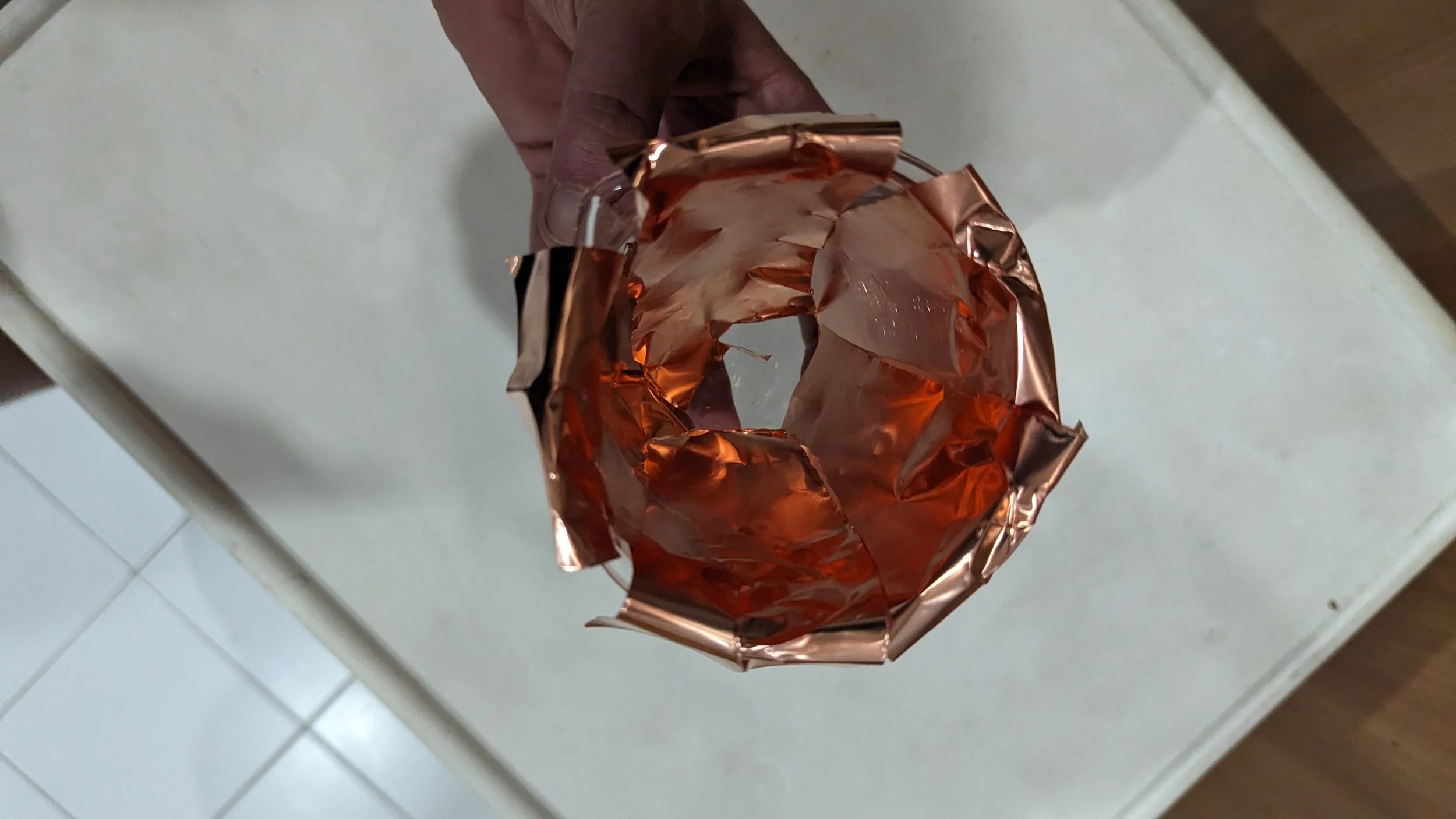
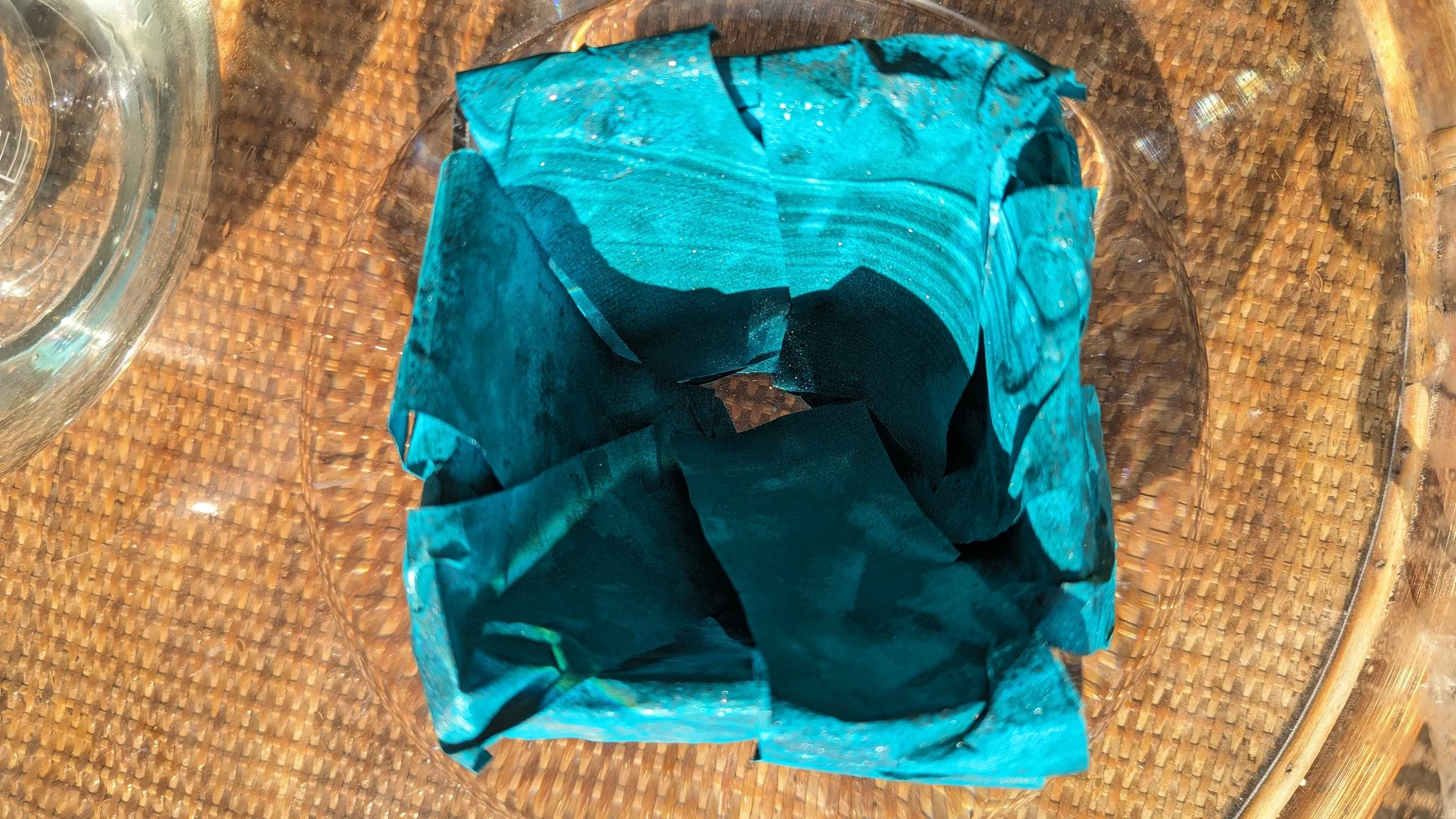
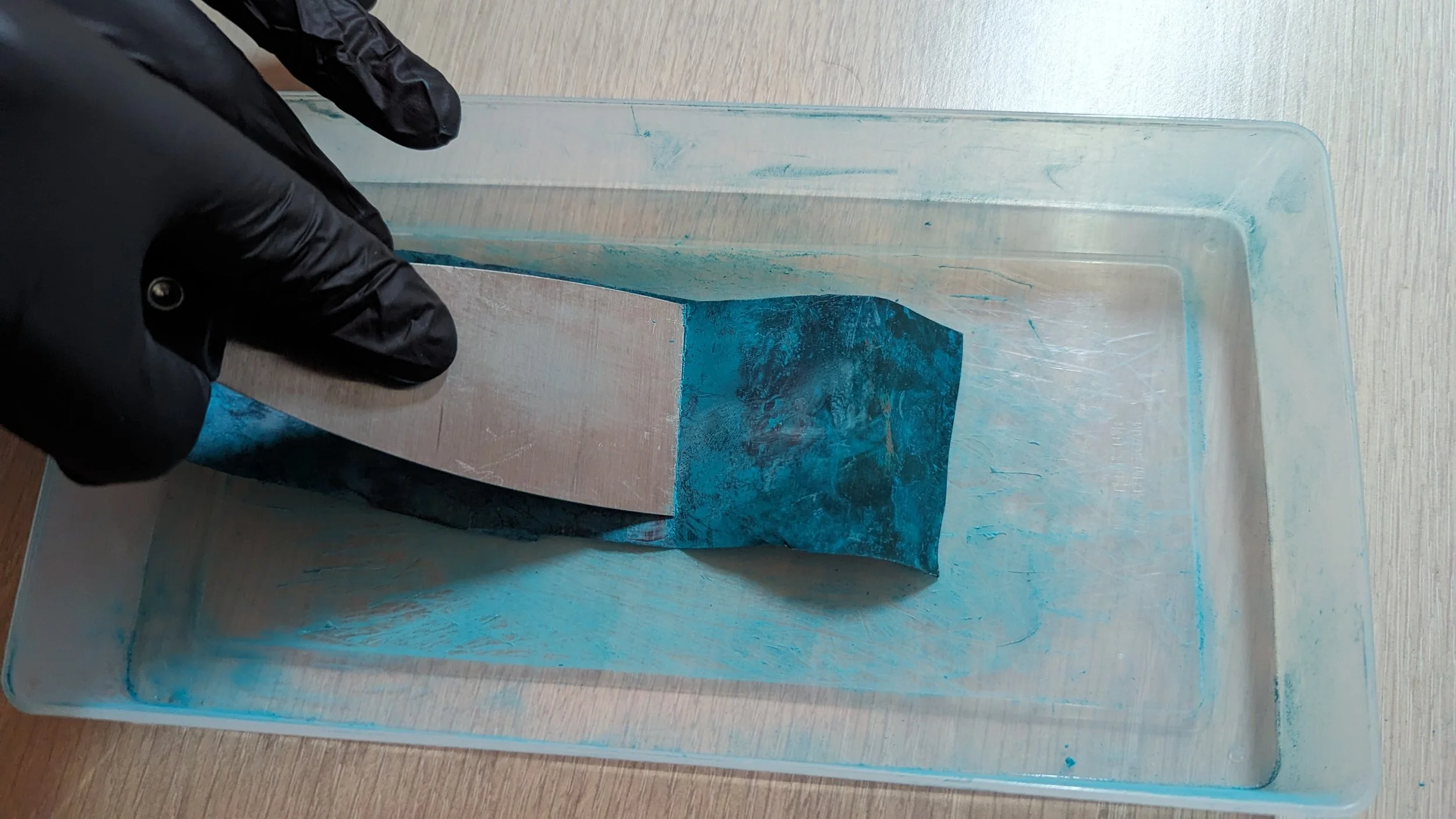
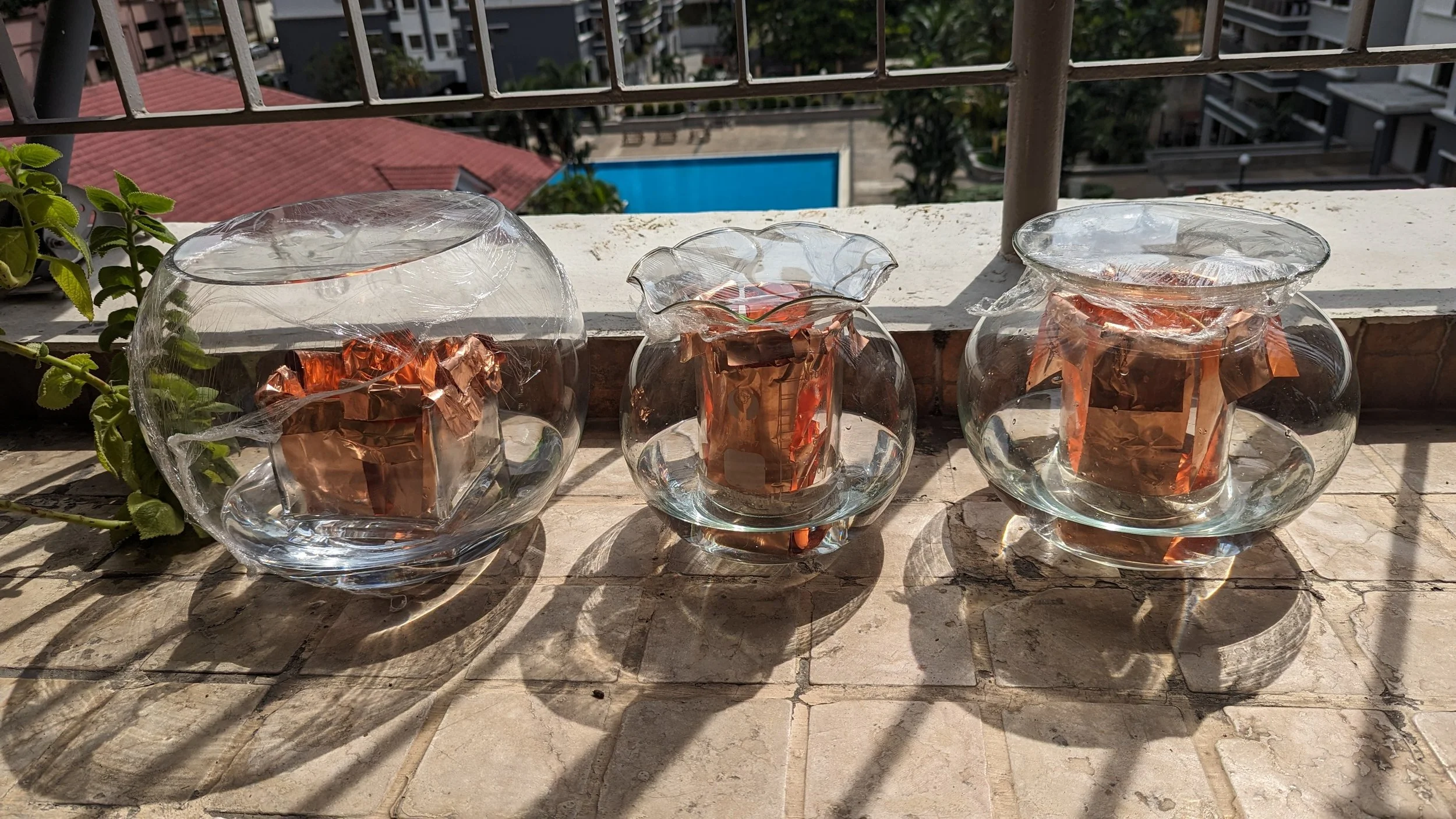
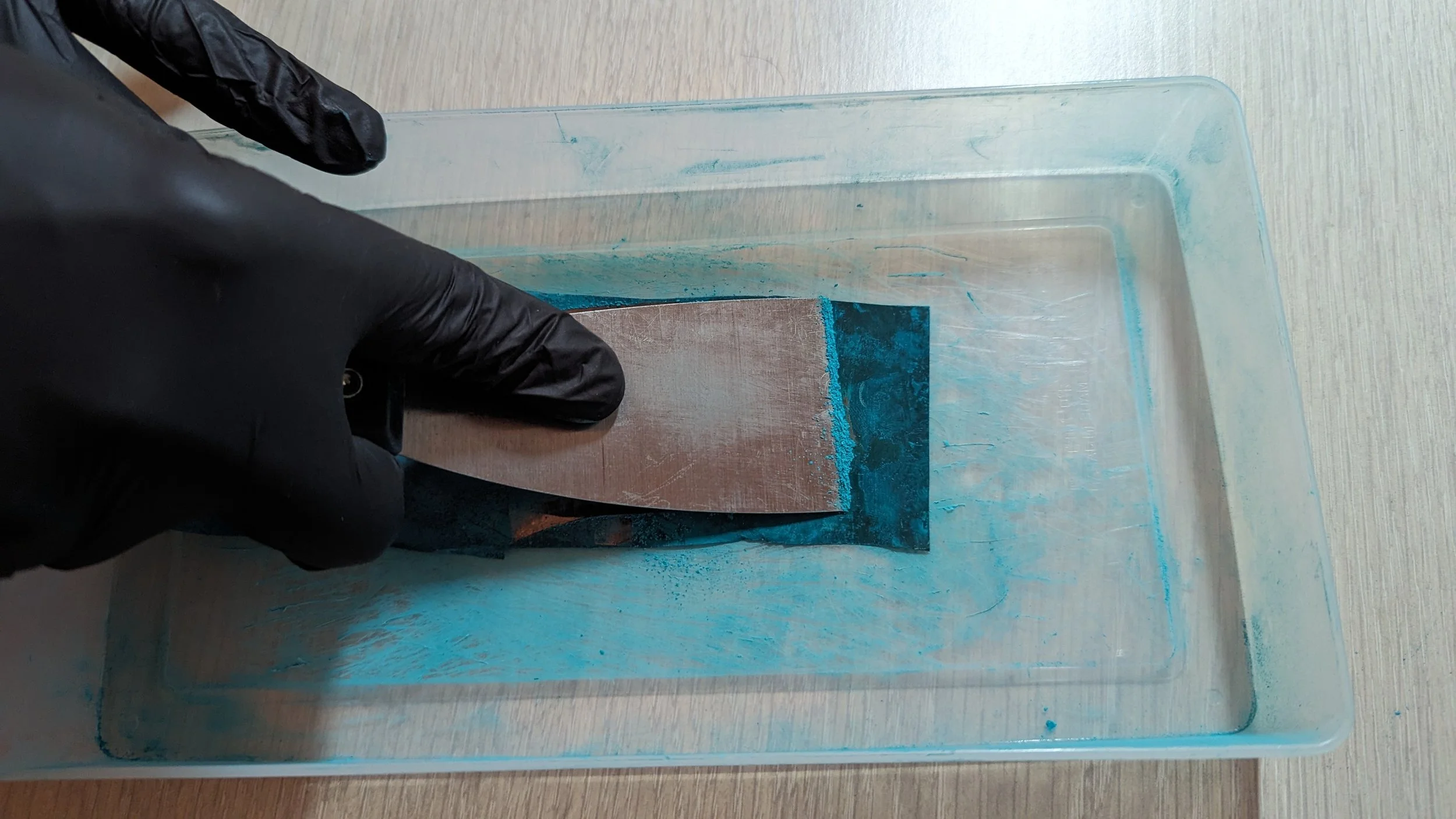
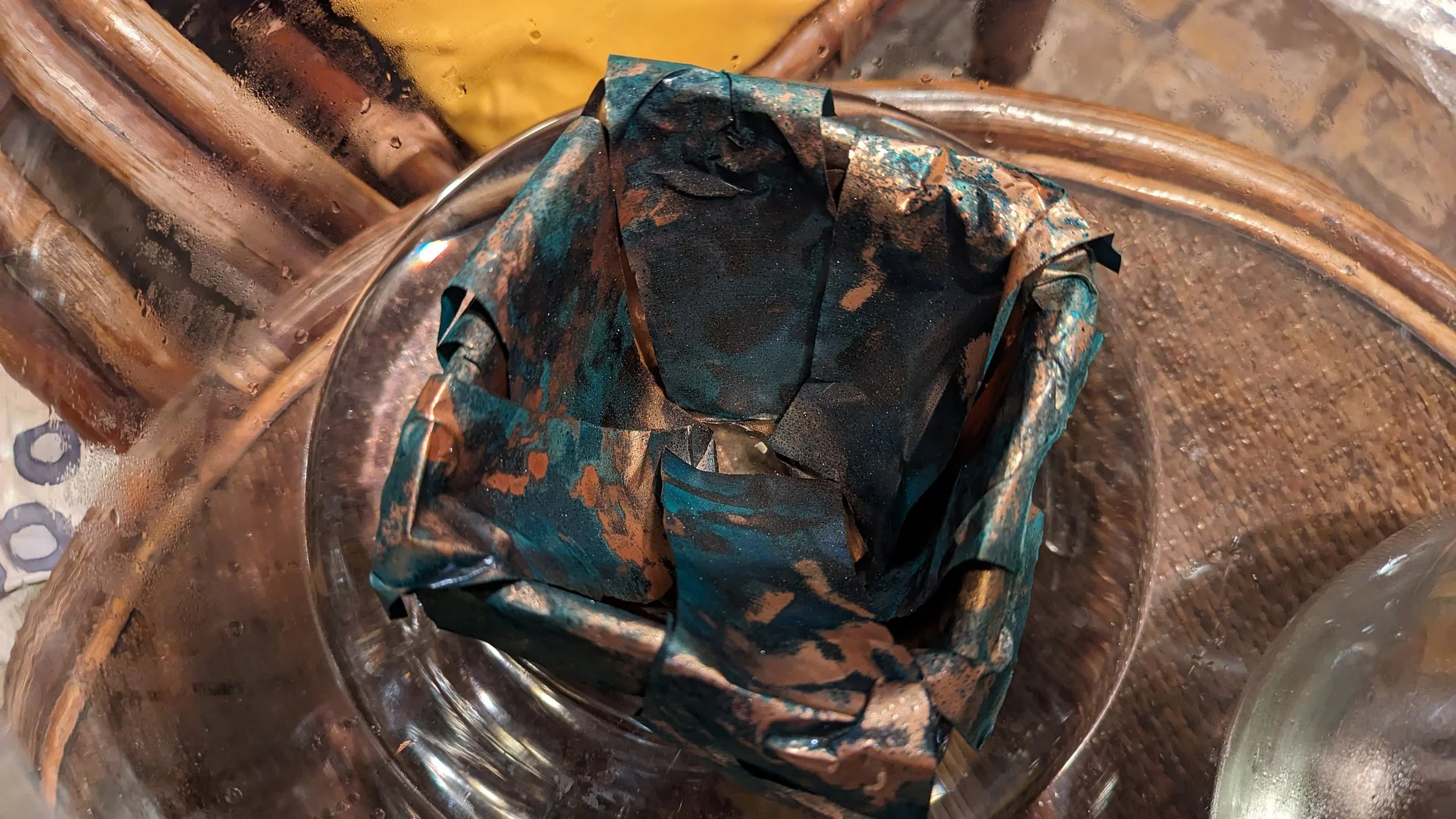
Copper sheets were positioned above, rather than immersed in, vinegar so that they were exposed to the vinegar vapour within the reaction vessel. As the green corrosion layer formed on the copper surface, it was scraped off and collected. The recovered material was dried and ground for documentation and comparison with the other reconstructed copper-green pigments.
Results and Observations
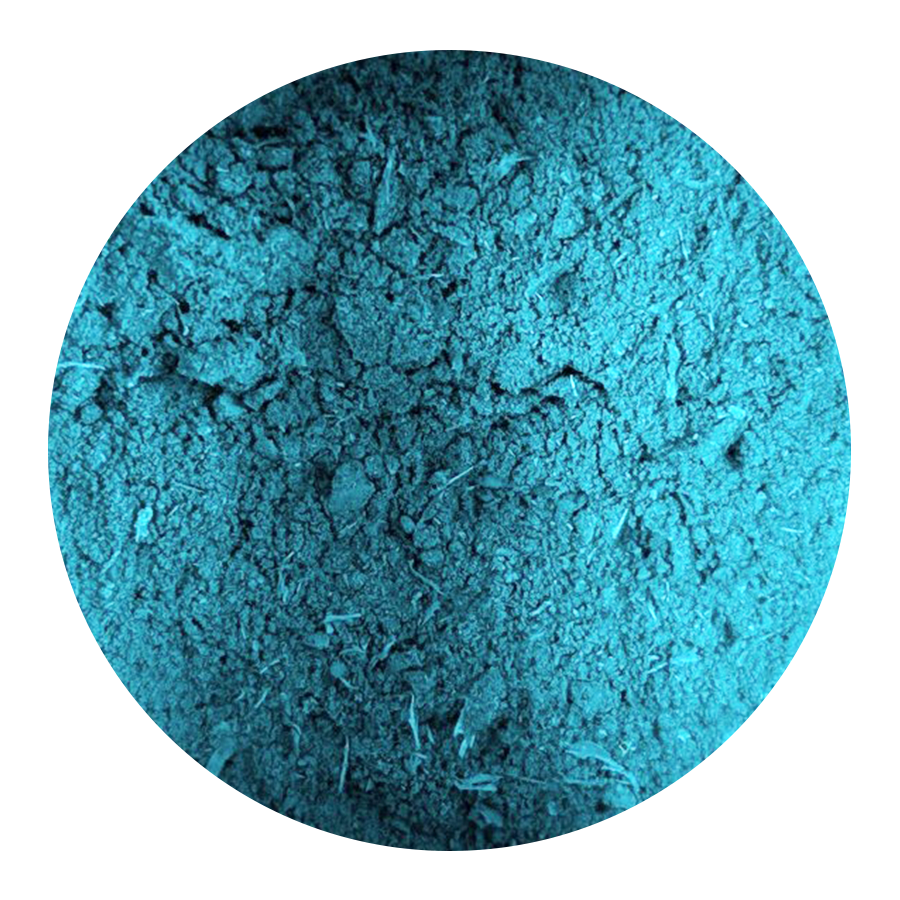
The reconstruction produced a visible green to blue-green corrosion layer on the copper sheets during exposure to vinegar vapour. The corrosion product formed on the metal surface and could be removed by scraping, allowing the material to be collected as a pigment. The procedure provides a direct experimental comparison with the milk-treated vapour reconstruction, in which an additional organic pre-treatment is introduced.
Significance
This reconstruction demonstrates a vapour-mediated route to copper-green production and helps distinguish surface corrosion above vinegar from direct immersion of copper in vinegar. It provides a useful reference for interpreting historical recipes that combine enclosed humid conditions with repeated scraping of the corrosion layer.
References
Afshār, Sadeq Beyk. Qānūn al-Ṣovar (1010 AH/1601). In Ketāb-ārāyī dar Tamaddon-e Eslāmī, edited by N. Mayel Heravi, 87–101. Mashhad: Islamic Research Centre of Astan-e Quds-e Razavi, 1993.
Tiflīsī, Ḥubaysh. Bayān al-Ṣenāʿat (12th century). In Farhang-e Irān-Zamīn, edited by I. Afshar, vol. V, 298–457. Tehran: Anjoman-e Asar-e Melli-ye Iran Press, 1956.